


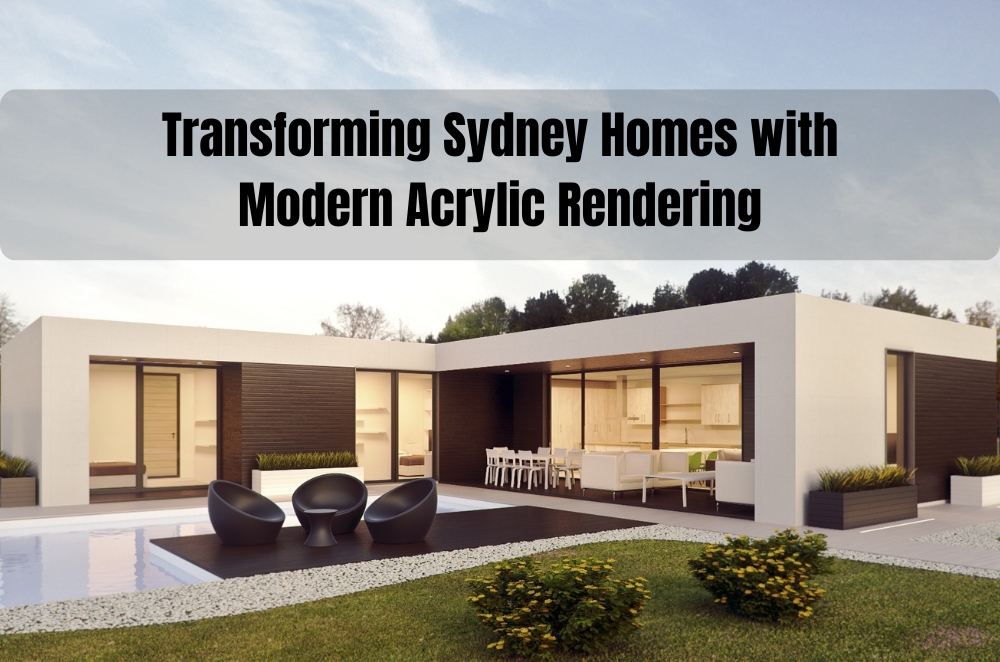
Walk around any Sydney suburb on a Saturday, and you’ll see it: tired brick veneers next to crisp, freshly finished facades that somehow make the whole street feel newer. In most cases, those makeovers come down to one thing – homeowners investing in modern acrylic render services to give their walls a second life. Acrylic rendering has quietly become one of the most effective ways to update an older home without knocking it down and starting again.
Why acrylic rendering suits Sydney homes
Sydney homes cop a pretty wild mix of conditions: salty coastal air, hot summers, cold snaps in the west, and the odd sideways rainstorm for good measure. Traditional sand-and-cement render can look great, but it’s not always forgiving when the weather and the building both move around a bit.
Acrylic render behaves differently:
- It’s more flexible than cement-based render, so it’s less likely to crack as your home expands and contracts.
- It can be applied to a wider range of substrates – brick, concrete, fibre cement sheeting and even painted surfaces (with correct prep).
- It dries faster, which is handy given Sydney’s unpredictable weather windows.
- It can form part of a modern wall system that helps with durability and weather resistance when paired with appropriate cladding and coatings.
From a purely practical point of view, acrylic rendering suits Sydney because it helps you get more out of the home you already have. Instead of ripping off old brickwork or recladding entirely, you can often achieve a major visual upgrade with a properly prepared substrate and a modern acrylic system.
How modern acrylic finishes transform older facades
Cosmetic change might sound superficial, but street appeal does a lot more than make your Insta shots look better. A consistent, well-detailed render finish:
- Visually unifies old and new parts of the home
- Hides a multitude of sins, like patchy brickwork and old repair lines
- Gives you a clean base for contemporary colours and design elements
- Can subtly modernise architectural styles without fighting the original character
Acrylic systems excel here because they’re compatible with a wide range of textures and topcoats. You’re not stuck with one “cementy” look. You can go:
- Lightly textured for a soft, coastal feel
- Smooth and sharp for a more architectural, minimalist aesthetic
- Heavier texture to disguise uneven masonry or older, wavy walls
When people talk about chasing an acrylic render smooth finish, they’re often thinking purely about looks. But in reality, that finish sits inside a bigger picture that includes things like how the render behaves as part of your external wall system and how it interacts with fire and building code requirements. The National Construction Code treats render as part of the external wall, and on certain building types, it needs to be non-combustible.
Performance benefits beyond good looks
Render is never just paint with extra steps. Done properly, an acrylic system adds real performance benefits alongside the visual lift.
Some of the big ones:
- Crack resistance: Acrylic-modified systems handle minor movement better than traditional cement render, which means fewer hairline cracks over time on most typical domestic scenarios.
- Weather resistance: When paired with the right topcoat, acrylic render helps shed water, resist wind-driven rain and protect the underlying structure.
- Compatibility with modern cladding systems: On newer projects or extensions, acrylic render can integrate cleanly with lightweight cladding and external insulation systems.
- Surface versatility: With good preparation, acrylic-based products can go over substrates that would be risky or outright unsuitable for old-school sand-and-cement.
We walked through the acrylic render pros and cons in plain language – better flexibility and finish versus slightly higher upfront cost and the need for a system-based approach. Once the owner understood that, the extra prep suddenly felt less like “overkill” and more like insurance.
The result? A consistent, durable finish that still looked fresh the last time I drove past, years later.
Design choices: textures, colours and details
Acrylic rendering isn’t just a technical upgrade; it’s also a design tool. The right combination of texture, colour and detailing can completely change how a home feels from the street.
Some of the key design variables you can play with:
- Texture level:
- Colour strategy:
- Feature elements:
If you’re renovating in Sydney, it’s also worth considering how your new render will sit alongside neighbouring homes. A crisp modern render on a Federation street can work beautifully, but it often looks best when you honour some of the original proportions and rhythms instead of fighting them.
Choosing the right team for your acrylic render
Acrylic render systems are more forgiving than some older approaches, but they’re not magic. The quality of the work still comes down to the team on the tools, the prep, and the willingness to say “no” to shortcuts.
When you’re talking to renderers in Sydney, it’s worth asking:
If you’re a hands-on type, you might be tempted to have a go yourself after watching a few online tutorials. There are some excellent technical resources out there that walk through how to acrylic render, from mixing ratios to trowel technique. Just keep in mind that what looks easy on video can be a very different story on a hot, windy Sydney afternoon when your mix is going off faster than you can get it on the wall.
Final Thoughts
Acrylic rendering has earned its place in Sydney’s renovation toolkit because it balances street appeal with substance. When the system is matched to the substrate, detailed at junctions, and finished with the right topcoat, you get a facade that shrugs off salt air, heat and sudden downpours while unifying decades of add-ons into a single, coherent look. The secret isn’t a miracle product; it’s careful prep, mesh and primers where they’re needed, honest conversations about movement joints, and an installer who treats the National Construction Code as a design constraint—not an afterthought. From fine, near-smooth textures to heavier finishes that tame wavy brickwork, acrylic systems let you tune character without fighting the home’s bones. If your place feels tired but the structure still has plenty to give, a well-executed acrylic render can deliver that “new home” feeling the moment you reach the curb—without the cost or disruption of starting again.