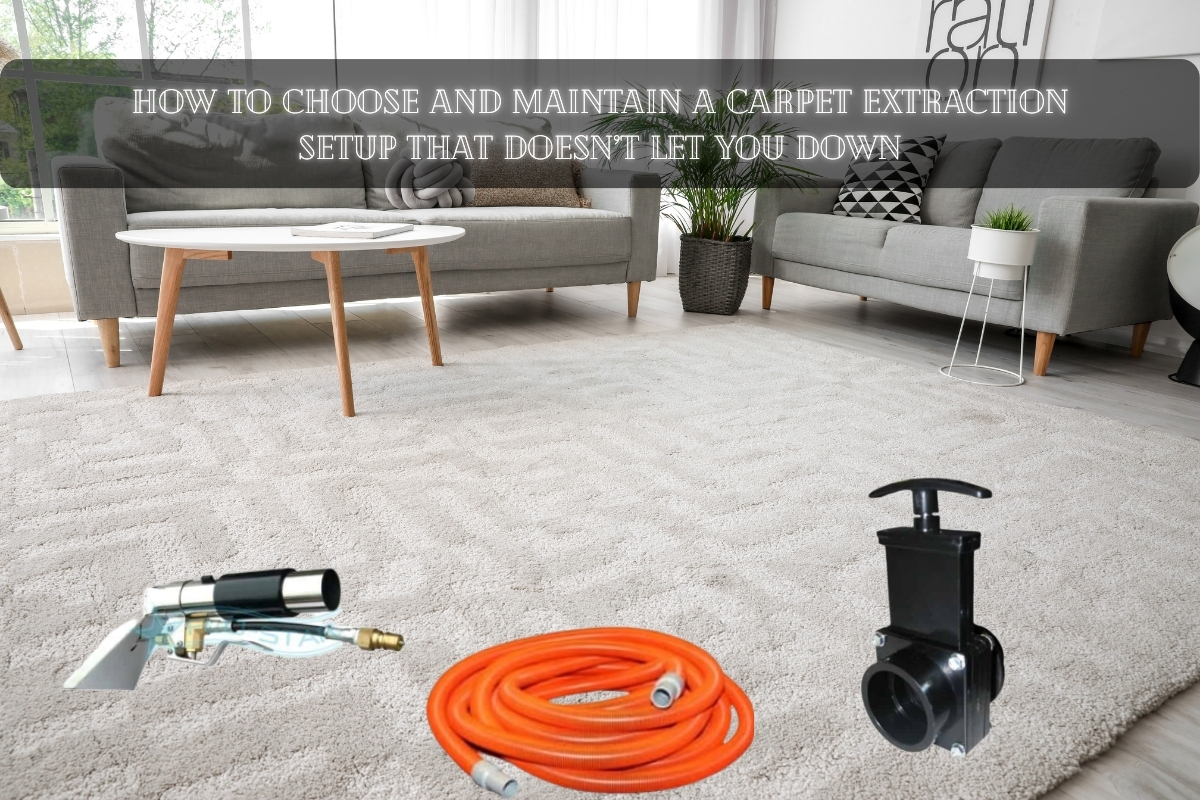
The day always starts the same way: keys collected, van loaded, first site on the list. Then it happens—halfway through a corridor or a busy reception area, the extractor starts sounding a little different. Not broken. Just… off. Suction feels lazy. The recovery tank takes longer to fill. The hose doesn’t sit right. And suddenly, a job that should’ve been tidy and predictable turns into a slow wrestle with your own gear.
That’s why “reliable carpet extraction” isn’t a buzzword in commercial work. It’s the difference between a calm day and a day when everything runs late.
For Australian businesses—cleaning contractors, facilities teams, venue operators, and anyone responsible for commercial-grade spaces—the goal is simple: choose a setup that matches the work, then keep it running in a way that doesn’t rely on luck.
What “reliability” really means (when you’re the one holding the wand)
Reliability is when the machine behaves the same way on Tuesday night as it did last month. Suction is strong. Solution flow is steady. The wand glides instead of grabbing. You’re not guessing what’s going to happen when you pull the trigger.
It’s also when problems are obvious early, not mysterious late. If the machine is built so basic maintenance is awkward, small issues hide until they become “why is this job taking twice as long?”
And yes—reliability includes the boring stuff. Cords, switches, strain relief, hose ends. They’re not glamorous, but they’re the bits that get dragged, kinked, slammed in van doors, and stepped on across a long week.
Common mistakes that shorten the extractor's life
The biggest mistake is treating maintenance like a once-in-a-while task. You know the moment: “We’ll rinse it later,” “It’ll be fine for one more job,” “It still works.” That’s usually how the slow decline starts.
A close second is leaving residue in the system. When machines don’t get flushed properly, you end up with detergent build-up, foaming, sticky valves, and airflow issues that make everything feel underpowered. The machine isn’t “weak”—it’s restricted.
Another one is chemistry and heat mismatches. Too harsh, and you’re asking hoses and seals to age early. Too mild for the soil level, operators compensate with extra passes that keep the carpet wet longer and fatigue the machine faster.
Then there’s handling. Hoses wrapped tight, kinks ignored, fittings dragged over thresholds, cords yanked instead of unplugged. None of it looks dramatic in the moment, but it adds up like sandpaper over time.
And one more that doesn’t get said out loud: not writing anything down. Without a simple log, every issue feels new, and troubleshooting turns into a guessing game that costs time you don’t have.
Decision factors when buying or upgrading (the stuff that matters after the first month)
A good buying decision starts with an honest look at the jobs you do most. If you mainly do offices and light commercial, you don’t need a setup that’s built for occasional massive restoration work—but you do need consistency, portability, and quick resets between sites.
Portability isn’t just convenience. It’s safety and speed. If one person can’t confidently load, unload, and manoeuvre the unit through real-world obstacles—stairs, lifts, long walks from parking—your “powerful” machine becomes a bottleneck.
Serviceability is the sneaky one. Ask yourself: how annoying is it to check the common wear points? If basic access is painful, people skip it. If people skip it, you get breakdowns that “came out of nowhere.”
Tool compatibility matters more than most teams expect. A wand or hand tool that doesn’t match the machine’s real vacuum and flow behaviour forces operators to compensate. The job still gets done—but with extra passes, extra moisture, extra fatigue, and extra time.
If you’re running multiple teams, standardisation beats perfection. Two different machines that do “basically the same thing” can still require different hoses, fittings, filters, and spares—and that’s how you end up with a van full of gear that doesn’t fit what’s on the floor.
Parts and repairs: The reality of downtime (and how to stop it eating your week)
Most downtime doesn’t arrive like a thunderclap. It creeps in. A filter that’s a bit clogged. A hose that’s collapsing slightly under suction. A fitting that seals “most of the time.” A pump that’s losing pressure but not enough to fully fail.
That’s why the best downtime strategy isn’t heroic repairs—it’s boring systems.
Start by standardising what you can: the machine models you rely on, the tools that go with them, the fittings, and the basic maintenance routine. The fewer variables you have, the faster you diagnose issues when something changes.
Then build two spare lists, not one.
On-the-road spares are the “finish the job” items: the parts that stop work if they fail.Workshop spares are the “restore performance” items: the parts you replace properly when you’re not under time pressure.
When you’re building a standard spares kit for the machines you actually run, it helps to keep a single reference for compatible items—AC Cleaning Supplies parts range can be that quick cross-check point.
The goal isn’t to stock everything. The goal is to stop one small failure from turning into a cancelled afternoon.
Common mistakes people make with “repairs”
A classic mistake is swapping one part without finding the cause. A new hose won’t fix a blocked filter. A new filter won’t fix a collapsing hose. You want to identify the bottleneck, not just replace whatever is easiest.
Another is letting “temporary fixes” become permanent. Tape, cable ties, and improvised fittings—they might get you through a job, but they also hide problems and can create new ones, especially when different operators use the machine.
And there’s the human factor: if a machine is always “a bit fiddly,” operators stop trusting it and start working around it. That’s when technique changes to compensate, and consistency disappears across jobs and staff.
A simple first-action plan (next 7–14 days)
Day 1–2: Write down what you actually run—machines, tools, hoses, fittings—and which jobs each one is used for most often.
Day 3–4: Do a “real-world check” on each setup: suction feel, solution flow, leaks, hose condition, cord condition, and how clean the recovery tank and filters are.
Day 5–6: Create a one-page end-of-job routine that’s easy enough to follow when you’re tired: rinse, tank clean-out, filter check, hose inspection, quick cord scan.
Day 7–9: Build a small on-the-road spares kit based on what has genuinely stopped work in the past. If it hasn’t stopped a job, it probably doesn’t live in the van.
Day 10–12: Start a simple log. One note per job when something feels different—sound, suction, smell, flow. That’s it.
Day 13–14: Review the notes and choose one focus: standardise fittings, improve maintenance discipline, or plan a structured repair schedule. Don’t try to fix everything at once.
Operator Experience Moment
The toughest shifts aren’t the worst stains—they’re the ones where the machine is “sort of working”, and you can’t tell why the job feels slow. I’ve watched teams burn an extra hour because suction was restricted by something small and totally fixable, and nobody wanted to stop and strip the line. Once the routine became automatic, the same crews moved faster with less effort, because the machine stopped fighting them.
Local SMB Mini-Walkthrough (Australia)
A lot of Australian cleaning businesses start with one extractor that’s expected to cover everything.As the workload grows, the first pressure point is usually time: sites want faster turnaround, not just “clean enough.”When hospitality jobs increase, drying time becomes the pain point because rooms can’t sit wet.When clinics or medical centres appear, repeatable processes and documentation matter more than improvisation.Then, staffing changes and the same machine is used three different ways by three different people.The businesses that stabilise quickest standardise the kit, enforce rinse routines, and keep a practical spares list in each vehicle.Upgrades then become targeted decisions, not panic purchases after a breakdown.
Decision factors when choosing a provider or approach
If you outsource repairs or servicing, the biggest factor isn’t the cheapest quote—it’s turnaround and clarity. You want to know what failed, why it failed, and what you should change so it doesn’t repeat.
Look for an approach that makes your team more consistent, not one that relies on a single “gun operator” who can get results no matter what. Consistency is what scales.
And don’t underestimate training. A simple, repeatable routine beats a complicated “best practice” that nobody follows when the day runs late.
Key Takeaways
- Reliability is what keeps commercial jobs predictable: steady suction, steady flow, and fast troubleshooting.
- Most breakdowns start as small restrictions or wear points—filters, hoses, seals, cords—then grow when ignored.
- Standardising machines, tools, and a minimal spares kit is one of the fastest ways to reduce downtime.
- A 7–14 day plan focused on checks, routines, and logging often improves results before any big upgrades.
Common questions we hear from Australian businesses
How do we tell if it’s the operator or the machine?Usually, do one controlled test patch with the same chemistry and a deliberate, slow pass speed before changing anything else. A practical next step is to clean/inspect filters, check for hose restrictions, and confirm the float shutoff in the recovery tank moves freely. In Australia, where teams often jump between very different sites in the same day, that quick test stops you chasing the wrong fix.
What spares should we carry without turning the van into a warehouse?In most cases, carry the parts that stop work immediately: the hose/fitting pieces that fail under pressure, key filters, and the common wear items your setup relies on daily. A practical next step is to look back at the last 10 interruptions and stock only what would have kept the job moving. In Australia, travel time between sites can make a small missing part feel like a full-day disaster.
When should we repair versus replace?It depends on whether you’re dealing with normal wear items or a repeating reliability pattern that keeps returning. A practical next step is to track downtime incidents for 30–60 days and estimate what they cost in missed time, then compare that to a structured service or refurbishment plan. In Australia, many operators prefer scheduled maintenance because it’s easier to plan around client commitments than surprise failures.
How do we standardise across crews without everyone complaining?Usually, standardisation gets accepted once it clearly makes jobs easier and faster, not harder. A practical next step is to trial one “approved kit list” and one-page end-of-job routine with a single crew for two weeks, then roll it out once the kinks are removed. In Australia, this approach works well for multi-site schedules where handovers and consistency matter more than individual preferences.