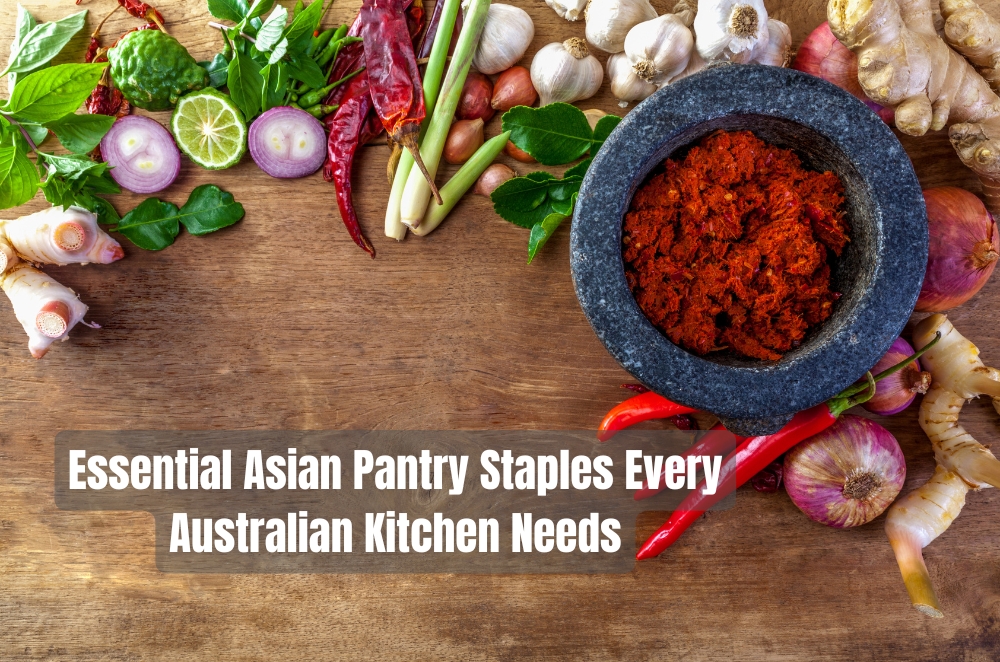
Open the pantry in a lot of Aussie homes and you’ll see a funny mix: Vegemite, pasta, tinned tomatoes… and a random bottle of soy sauce that someone picked up after Googling Asian grocery wholesale in Brisbane or ducking into the little Asian grocer near the station. It’s not “exotic” anymore. It’s just part of the normal shop.
This isn’t a chef-y lecture. It’s more like a mate running you through the Asian bits and pieces that actually earn their spot in a real Australian kitchen – stuff you’ll reach for on a Wednesday night when you’re knackered and everyone’s already asking what’s for dinner.
Why Asian staples are turning up in Aussie cupboards
A generation back, soy sauce and instant noodles were about as adventurous as many households got. Now it’s pretty standard to eat stir-fries, dumplings or noodly soups a couple of times a week without thinking twice.
A few reasons these staples have stuck around:
- They rescue leftovers. Old rice, a limp carrot and an egg can turn into proper fried rice with the right sauce.
- The cooking style suits busy lives: hot pan, quick cook, minimal mucking around.
- Flavours line up with how we already like to eat – salty, savoury, a bit sweet, sometimes spicy.
- They match the neighbourhood. Our streets and schools are full of families with roots all over Asia, so the pantry naturally follows.
When I first moved into a share house in Sydney, we unpacked the shopping and realised we had three types of soy sauce, two different curry pastes and absolutely no sugar. No one panicked. We just made a huge fried rice, chucked in whatever veg we had, and called it dinner. It was great.
Sauces and condiments that do the heavy lifting
If your pantry feels a bit same-same, the fastest way to shake it up is with a couple of new sauces. You don’t need a whole shelf – just a small crew of bottles and pastes that can pull their weight.
Everyday workhorse sauces
- Soy sauce (light or all-purpose). Think of this as a salty flavour rather than just “Asian sauce”. It goes into stir-fries, marinades, fried rice and even the odd gravy when you want more depth.
- Dark soy sauce. Thicker, slightly sweet, used in smaller amounts. Great for colour and deeper taste in braises and noodle dishes.
- Oyster sauce. The “tastes like takeaway” cheat. A spoon through veg and noodles, and suddenly it feels like you meant that meal.
- Fish sauce. Smells a bit hectic straight from the bottle, but a dash in Thai or Vietnamese dishes – or even in soup – works wonders.
Acids, oils and flavour bombs
- Rice vinegar. Mild, slightly sweet. Good for quick pickles, slaws and salad dressings.
- Black vinegar. Darker and more complex. Perfect in dumpling dipping sauces or over cold noodles.
- Toasted sesame oil. You don’t cook with this; you finish with it. A drizzle over soup or noodles at the end, and it suddenly tastes “restaurant”.
Then there are the pastes:
- Miso paste. Lives in the fridge for ages. Stir into broths, rub on pumpkin before roasting, or whisk into a salad dressing.
- Gochujang. Korean chilli paste that’s sweet, spicy and savoury. Slap it on wings, mix it through roast veg, or stir a spoon into fried rice.
- Thai curry pastes. One spoon, some coconut milk and whatever meat or veg is lying around, and you’ve got a decent curry without measuring fifteen spices.
Noodles, rice and carbs that actually get used
The carb aisle in an Asian grocery can be a bit of a rabbit warren. You don’t need to know what every single packet does. You just need a couple that suit how you cook.
Rice basics for Aussie kitchens
- Jasmine rice. Light, fragrant, a bit sticky. Ideal with stir-fries, curries and grilled meats.
- Short-grain or sushi-style rice. Good for rice bowls, onigiri or when you want something more comforting than regular long-grain.
- Mixed grain blends. Brown rice with bits of barley or black rice if you want more texture and fibre without going full health nut.
Noodles for “what’s for dinner?” nights
- Rice stick noodles. Great for pad-thai-ish dishes and cold noodle salads. Soak in hot water rather than boiling so they don’t turn to mush.
- Fresh egg noodles. Sold in the fridge section. Quick to cook and brilliant for throw-together stir-fries.
- Instant ramen. No judgement. Ignore the packet instructions and upgrade with egg, frozen veg and leftover meat.
- Udon or soba. Thick udon for soupy bowls; buckwheat soba for chilled noodle salads in summer.
Honestly, one rice and two noodle types are plenty. Build a few regular meals around those, and suddenly you’re not staring blankly into the pantry every night.
Shopping Aat sian grocers without feeling completely lost
The first time you step into a proper grocer at BKK Australia, it can feel a bit like organised chaos. Shelves stacked to the ceiling, freezers humming away, half the labels in languages you don’t read yet. Easy to get overwhelmed, grab a stack of snacks and forget the actual staples.
Don’t just chase the cheapest sticker
It’s tempting to sit on the couch, scroll supermarket apps and trawl through online grocery shopping in Australia reviews to work out where to shop. Helpful, but it doesn’t tell the whole story. Understanding unit pricing – that tiny “per 100g” or “per litre” line – is what really lets you compare big chains with local Asian grocers.
On the day:
- Look at the unit price, not just the big bold number on the shelf.
- Don’t assume the giant bottle is always a bargain; sometimes it’s barely cheaper per 100g.
- Be honest about how quickly you’ll use it. A two-litre bottle of fish sauce isn’t a win if it gathers dust for three years.
Start with what you already recognise
You don’t get extra points for buying the weirdest thing in the shop. Start simple:
- Grab brands you’ve seen at your favourite noodle place or sushi bar.
- Copy a mate’s rice or soy sauce if you’ve liked it at their place.
- Pick one “no idea what this is, but it looks fun” item per trip and Google it when you get home.
And don’t feel locked into “traditional” use. Miso in pumpkin soup, rice vinegar in coleslaw, gochujang on chicken for the weekend barbie – all fair game.
If you’ve ever gone down a korean shop online in Australia rabbit hole, you’ll know the internet is full of mash-ups: kimchi toasties, gochujang wings, ramen carbonara. Some are questionable. Some are brilliant. You’ll figure out which is which pretty quickly.
Final Thoughts
An “essential pantry” isn’t a celebrity-chef checklist; it’s whatever makes feeding yourself and your mob doable on a tired weeknight. For many Aussies, that’s soy sauce, decent rice, a couple of noodles, curry paste, something spicy in a jar and emergency dumplings in the freezer. Keep adding one new sauce, noodle or frozen backup at each shop, keeping only what earns its spot, and dinner slowly becomes simpler, cheaper and much less stressful.