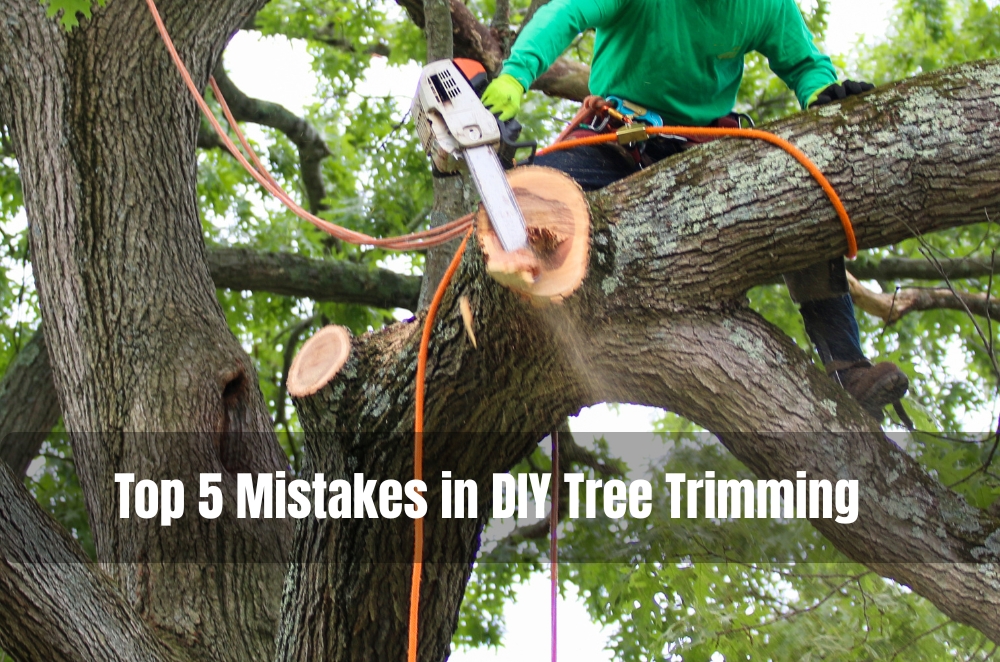
Weekend rolls around. A branch taps the roof, the hedge’s gone feral, and the ladder’s calling your name. You figure a few careful cuts will sort it. Maybe. But I’ve watched a lot of “quick tidy-ups” turn into tricky, long-term problems. If you’re already thinking this might get spicy, there’s no shame in lining up tree trimming and pruning services —especially when height, powerlines, or permits are in the mix. If you’re still keen to DIY, avoid these five common mistakes, and you’ll save yourself grief (and money).
Mistake 1: No plan, just vibes
Most botched trims start before the saw even fires up. No goal. No structure. Just “that bit annoys me.” Trees don’t bounce back like a buzzcut; every cut changes load, shade, and future growth.
Quick gut-checks before you touch a branch:
- What’s the purpose—clearance, light, safety, or looks?
- Which main limbs define the tree’s shape? Mark them “hands off.”
- How much foliage can you remove without stress? Less than you think.
- What should this look like in two years, not two hours?
I mucked this up on a magnolia out front. Nibbled at the bits near the gutter. Looked tidy that day; six months later, it leaned visually, canopy hollow on one side, heavy on the other. A proper plan would’ve kept structure and saved me the awkward silhouette.
If you’re fuzzy on scope, a neutral explainer on tree pruning vs trimming helps you choose the right job—and the right cuts.
Mistake 2: Cutting in the wrong place, the wrong way
Where you cut matters more than how sharp the blade is. Trees don’t “heal”; they compartmentalise. Hit the wrong tissue, and you invite decay.
Classic DIY missteps:
- Flush cuts that slice off the branch collar.
- Stubs left “for now” that never get recut.
- One big top cut so the branch tears a long strip of bark.
- Topping to shorten a tree instead of reducing to laterals.
There’s a standard for this: AS 4373. It’s not bedtime reading, but it shows exactly how to protect the tree’s natural defences. If you want a single reference to check the technique, see the Australian standards for tree work.
Better habits you can use today:
- Use the three-cut method for anything heavy: undercut, top cut further out, then a neat final cut at the collar.
- Final cut sits just outside the collar. Not flush. Not a peg.
- When shortening, reduce to a lateral at least a third of the parent branch’s diameter.
- Skip topping. It triggers weak, fast, ugly regrowth that costs more later.
Confession: I once rushed a eucalypt before a storm and skipped the undercut. Bark peeled down the stem like a zipper. Years later, you could still see the scar. Thirty seconds saved, seasons of regret.
Mistake 3: Treating safety like an optional extra
From the lawn, everything looks lighter, easier, safer. Up a ladder, wind gusting, saw buzzing—different story. Gravity gets a vote.
Risky tells:
- Ladder propped in a garden bed. “Feels fine.”
- No exclusion zone—kids, pets, or a car parked under the drop.
- One-handed chainsaw heroics, no chaps, no visor.
- “Just trimming near powerlines.” (Hard stop. Don’t.)
DIY crosses into “call a pro” when:
- Branches hang over roofs, vehicles, glass, or public paths.
- You’re anywhere near live wires—even if they’re “not touching”.
- The tree shows decay, fungi, cracks, or a weird lean.
- You need to rig limbs down in pieces.
I helped a neighbour with a jacaranda over a driveway. We rigged a limb and accounted for swing—so we thought. The weight shifted, then twisted far further than planned. Missed his ute by a whisker. The area was cleared, and no one was below. That preparation—not luck—kept it a story, not an incident.
Mistake 4: Forgetting councils, rules, and neighbours
Trees cross fences. Laws and relationships do, too. Many councils protect certain species, trunk sizes, or trees in heritage overlays. Street trees? Usually hands-off without permission. Boundary trees? Ownership can be shared.
Save yourself dramas:
- Check your council’s pruning/removal page and any vegetation overlays.
- If the tree is big, native, prominent—or you’re unsure—call the arboriculture or planning desk.
- Email photos if they ask; it speeds up guidance.
- Talk to neighbours. Five minutes at the fence beats a complaint letter later.
I’ve watched “two-branch jobs” spiral into inspections and orders to fix work, purely because no one made the call first. Paperwork feels slow—until the alternative knocks.
Mistake 5: The once-a-decade chop
Ignore a tree for ten years, then take half of it off in an afternoon. Looks decisive. Usually backfires. The tree responds with epicormic sprouts—skinny, weak attachments—so you end up with a denser, riskier canopy in short order.
Smarter rhythm:
- Light, regular trims to guide structure, not reset it.
- After bigger jobs, water and mulch; keep mulch off the trunk.
- Watch how cuts callus over months; look for signs of decay.
- Schedule your next check instead of waiting for the next crisis.
If costs are the blocker, a plain-English explainer, such as how much is tree trimming service helps set expectations—gear, crew, insurance, disposal—and stops the “cheap now, pay later” cycle.
When DIY makes sense (and when to step back)
DIY can be perfectly fine. Keep it small, keep it safe, keep it grounded.
DIY-friendly jobs:
- Dead twigs and small branches you can cut from the ground.
- Light clearance over garden paths (not roads) and windows.
- Young trees where the structure is still forming.
- Simple hedge shaping—little and often.
Time to call in help:
- Anything at height or near powerlines.
- Sections to be rigged down, or limbs over roofs/solar.
- Visible defects—fungi, cavities, splits—or storm damage.
- Situations needing permits, reports, or neighbour sign-off.
Pros aren’t just “people with bigger saws.” They manage risk, handle permits, and work according to the principles in the Australian standards for tree work. That’s the difference between tidy-now and healthy-long-term.
Quick checklist before you cut
- Purpose clear? (Light, safety, clearance.)
- Keeper limbs marked?
- Drop zone set and actually empty?
- Tools sharp, PPE on, ladder stable?
- Any chance of wires, roads, pedestrians, or permits? Stop and reassess.
And if the little voice says, “This feels sketchy,” listen. Book tree trimming and tree pruning services in Melbourne and live to garden another day.
Final thoughts
DIY trimming isn’t about bravery. It’s judgment. Start with a plan, cut where the tree can cope, respect gravity and neighbours, and treat care as maintenance—not a decade-late purge. Do that, and your trees will be safer, better looking, and far less needy. Push past your limits, and you’ll spend more fixing mistakes than you would have hiring help in the first place. Keep the small jobs; hand off the rest. That’s not defeat—it’s good stewardship.