


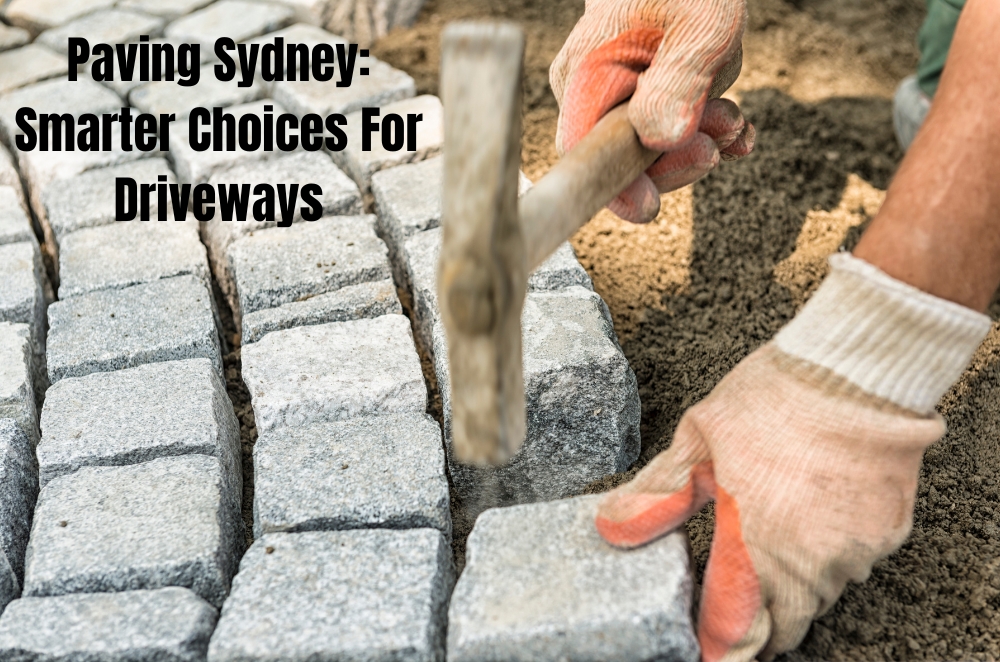
Driveway paving isn’t something Sydney homeowners think about until it starts giving them grief. Soft spots, pooling water, tyre ruts—they creep in slowly and then become impossible to ignore. Sydney’s heat swings, random downpours, and patchwork soil types only raise the stakes. That’s why a build that looks picture-perfect on day one can shift, settle, or lose its edge months later if the groundwork wasn’t nailed. Anyone weighing up materials, contractors, or timing should start with driveway paving Sydney as a reference point, because what matters most isn’t the surface—it’s how the layers beneath hold up when weather and wheels begin testing them. The real aim is simple: a driveway that lasts, drains cleanly, and stays good-looking without constant patch-ups.
Sydney blocks vary wildly. Some sit on sandy pockets that drain too fast, others on clays that swell and shrink whenever the season turns. That’s why the soil test isn’t a token step. It guides excavation depth, base thickness, drainage decisions, and whether reinforcement makes sense. When we talk paving, we’re talking compaction, edge restraint, bedding layers, and falls that manage water rather than trap it. Get those fundamentals right, and even an inexpensive paver can perform for decades. Get them wrong and the driveway will start telegraphing problems long before its time.
What base keeps Sydney driveways stable?
A stable driveway starts with compacted road base over a firm, tested subgrade. In high-load areas—especially braking and turning zones—a cement-stabilised layer can add insurance. Our take on this process sits neatly within the Sydney paving project tips.
Most failures begin with small compromises: a base that’s too thin, edges without restraint, or bedding sand that migrates after heavy rain. Every layer depends on the one before it. Edge restraints stop creeping and hold jointing sands in place. Falls matter more than most people realise; poor drainage will punish weak spots and push water toward the garage or slab.
• Aim for 100–150 mm road base under vehicle paths
• Use concrete haunching to secure edges
• Maintain a 1:80–1:60 crossfall to shift runoff
• Add geofabric where soils are reactive or soft
Once the structure is right, the surface choice becomes more about look, texture, and long-term maintenance. Strong bones always pay off—fewer call-backs, fewer dips, and far less movement during Sydney’s heat swings.
Which pavers truly last in Sydney?
The pavers that survive Sydney’s conditions aren’t defined by style but by thickness, traffic rating, and finish. Both concrete and clay units are solid choices, provided they’re rated for vehicle load and installed over a supportive base. Colour matters too. Pale tones bounce light but highlight stains; darker tones hide marks but heat up quickly in summer.
Concrete pavers give predictable sizing and come in a wide mix of colours and face textures. Clay pavers weather differently, often ageing into richer tones while handling scuffs well. Neither is universally better—what matters is choosing units that suit the block, the load, and the look you’re chasing.
• Choose 60–80 mm thick, traffic-rated units
• Prefer textured finishes for slip resistance
• Opt for salt-safe units near coastal areas
• Match tones to nearby paths, facades, or fencing
Jointing sand is another small detail with big consequences. Cheap or loose sands wash out quickly, especially on sloped driveways, leaving joints open and pavers unstable. Polymer sands help lock everything in, slashing the frequency of top-ups.
How do we keep driveway maintenance simple?
A driveway designed well is genuinely easy to maintain. Falls direct water away instead of letting it pool. Locked edges stop shifting. Stable joints make weeds less likely. From there, care becomes straightforward: sweeping, hosing down after messy jobs, and occasional jointing top-ups.
Tree placement also deserves more attention than it usually gets. Some species spread roots aggressively, lifting corners and cracking edges. Planning around mature height and root behaviour can save years of repairs. Oil marks happen, so keep mild detergent and a soft brush close; most stains lift if tackled early. Just remember: sealing helps with stain resistance but won’t prevent abrasion or tyre scuffs.
Conclusion
A long-lasting driveway isn’t defined by its surface alone—it’s the sum of deep prep, careful base construction, proper drainage, and a paver choice that’s matched to the way the space is actually used. Homeowners often realise mid-project just how much the ground conditions dictate material success; that’s where resources such as paver options for Sydney weather become useful for real-world comparisons. The real wins come from respecting the site: understanding its soil, slope, and exposure, then choosing materials that work with those traits instead of against them. With strong groundwork and properly rated pavers, a driveway won’t just look sharp on day one—it’ll hold shape, colour, and stability for the long haul.