


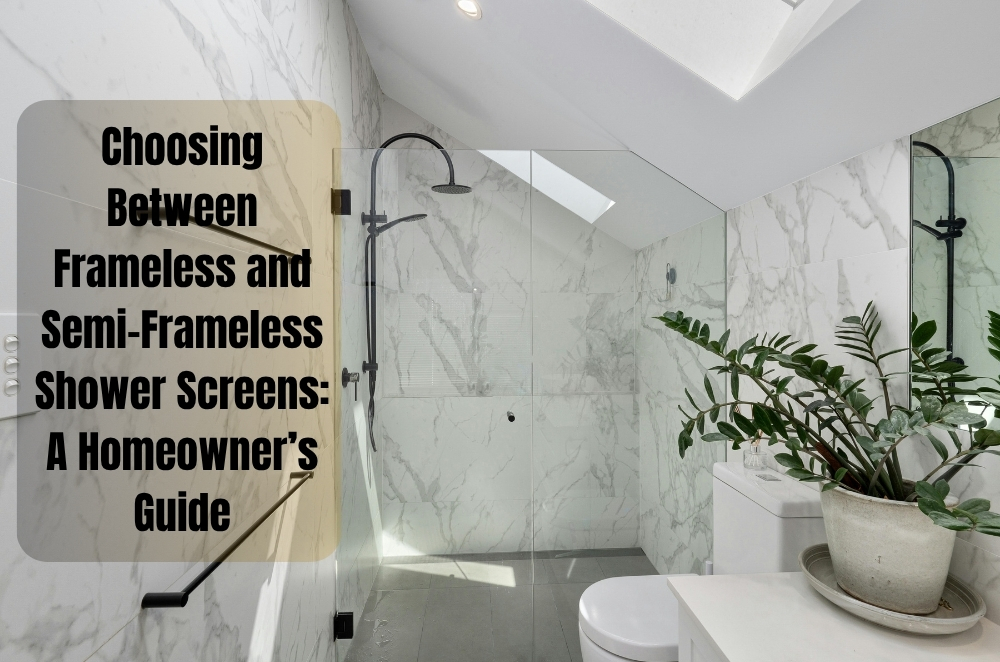
Before you fall in love with a glossy photo, look at habits, space, and budget. If mornings are a rush and cleaning time is scarce, that matters as much as style. I like to anchor expectations early, so I’ll pull up the shower screen cost in the very first conversation; it keeps ideas grounded. With a baseline in mind, ask yourself: how big is the room, who’s using it, and how much splash is acceptable? Those answers narrow your choice faster than any mood board.
What frameless and semi-frameless actually mean
Let’s translate the jargon quickly.
- Frameless uses thicker (often 10–12 mm) Grade A toughened glass with minimal metal—just discreet brackets, channels, and hinges. The look is clean and open, almost like the glass is floating.
- Semi-frameless uses slightly thinner toughened glass with a slim perimeter frame and tidy edges around the door. It’s lighter on hardware and more forgiving if your walls aren’t laser-straight.
What does that mean day to day:
- Weight and structure: Frameless panels are heavier and rely on premium hinges and precise fixing points. Semi-frameless shares load through its frame, which can suit older walls.
- Water control: Semi-frameless systems often include deliberate seals and channels. Frameless can perform just as well, but it depends on meticulous set-out.
- Tolerance: Frameless likes plumb walls and square corners; semi-frameless tolerates small deviations without fussy shimming.
On safety, both must meet Australian rules for human-impact zones. If you want the chapter-and-verse, the National Construction Code explains glazing near baths and showers—have a skim of safety glass shower screens so you know what your quote should include.
How they look, clean, and live
Bathrooms are humid, busy, and occasionally chaotic. Here’s how each option behaves in the wild:
- Look and light: Frameless practically disappears, which makes a small ensuite feel larger and lets the feature tile or stone do the talking. Semi-frameless still looks sleek—thinner lines than a fully framed unit—just with subtle edges.
- Cleaning: Less metal means fewer grime traps. Frameless edges squeegee quickly; semi-frameless has more joins and seals, but modern kits are miles better than they were a decade ago.
- Hardware longevity: Good frameless hinges last, but they work hard and deserve quality. Semi-frameless spreads stress over the frame, which can be forgiving when family members close the door with enthusiasm.
- Splash: In tight recesses, semi-frameless with a magnetic seal and tidy threshold, is very well behaved. Frameless can be equally tidy if the overlaps, falls, and clearances are nailed.
Micro-habits matter either way: squeegee after each use, microfibre the edges twice a week, and consider nano-coating if the budget allows—it slows mineral build-up.
Where the dollars go (and how to control them)
It’s not just “frameless costs more.” It’s why:
- Glass thickness adds purchase, transport, and handling costs.
- Hardware (hinges, channels, brackets) swings the total—lifetime-rated sets are a smart spend.
- Labour and set-out: Frameless needs careful survey and tighter tolerances.
- Site quirks (out-of-plumb walls, nibs, recessed hobs) add time whichever way you go.
Money-smart moves that keep outcomes high:
- Opt for a fixed panel walk-in or a simple pivot instead of complex sliders in small spaces.
- Align glass edges with tile joints where possible to reduce tricky cuts.
- Confirm wall blocking for hinges/channels before sheeting—chasing studs after the fact burns time and budget. If numbers shift mid-reno, revisit shower screen cost once layout and hardware are locked; small spec tweaks can nudge the final price.
A practical decision framework
When I’m onsite with homeowners, we run this checklist rather than arguing aesthetics:
- Small room, splash control matters, steady budget → Semi-frameless for reliable seals and predictability.
- Large room, hero tile, strong light → Frameless fixed panel or pivot to let materials shine.
- Older walls with a hiccup or two → Semi-frameless tolerates minor deviations.
- Kids, rentals, or heavy traffic → Semi-frameless for easy part replacement.
- Accessible, step-free entry → Frameless walk-in with a generous fixed pane and no door to fight.
My field notes (two real jobs, two different answers)
Job 1: Narrow terrace ensuite We had 900 mm between walls, a vanity nib exactly where you don’t want it, and a window reveal hugging the shower corner. Frameless would’ve looked sensational, but the swing arc was mean, and Splash risked hitting the vanity. We specified a semi-frameless pivot with a discreet perimeter and magnetic seal. The lines stayed light, water behaved, and the saved budget went to better task lighting and a heat lamp.
Job 2: Coastal family bathroom A 1200 × 900 shower with a linear drain and rectified 600 × 600 porcelain—clean geometry and enough room to breathe. We went frameless with a fixed panel and no door. Daily wipe-down takes seconds; the space reads bigger, and the tapware becomes the hero. Three months later, I checked in: nano-coat plus the “squeegee rule” meant no scale lines and zero silicone discolouration.
Spec items to confirm before ordering
Get these right on paper, and installation day gets boring—in a good way:
- Falls to waste: Ensure slopes keep water inside the shower zone.
- Plumb and square: Measure and note deviations; frameless tolerances are tighter.
- Fixing points: Map studs/noggins to hinge or channel locations.
- Clearances: Check door swing, towel rails, and toilet set-outs to avoid clashes.
- Seal strategy: Decide on thresholds, sweeps, and magnetic seals up front.
- Ventilation: Steam management equals less maintenance and happier paintwork.
For inspiration on layouts, hardware finishes, and edge details, plan an internal post around frameless screen designs; it keeps your ideas cohesive rather than scattered across screenshots.
The comparison everyone searches for
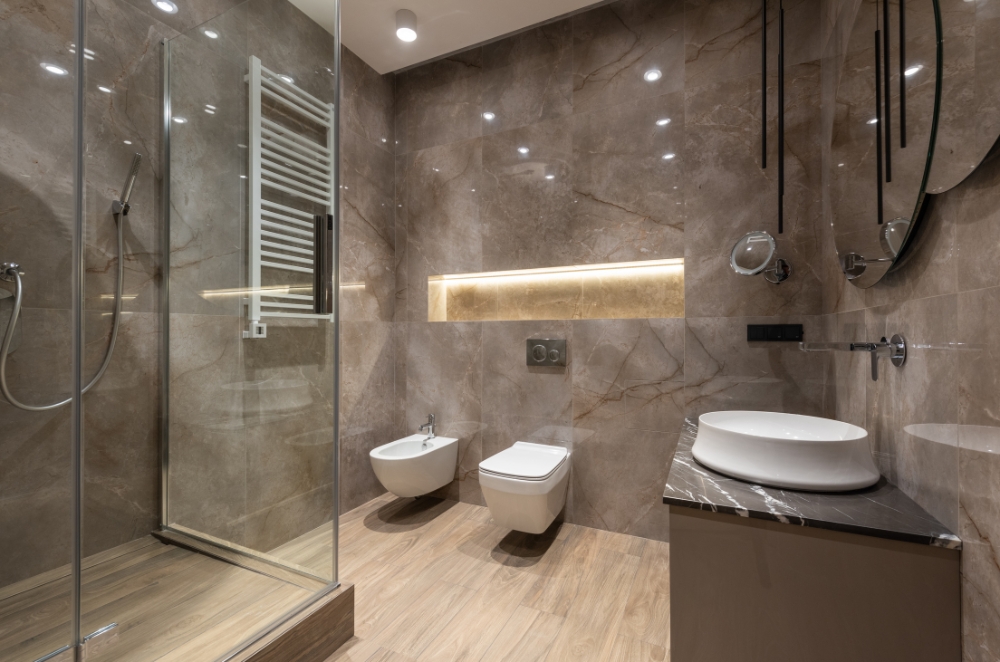
Nuance beats myth. Frameless isn’t “fragile”; it’s engineered differently and relies on quality hardware. Semi-frameless isn’t “old-fashioned”; it’s crisp and practical when detailed well. If you like independent takes on hinge mechanics, glass thickness, and sealing profiles, it’s worth skimming a neutral explainer on semi-frameless shower screen vs frameless. It helps frame trade-offs without turning the choice into a team sport.
Safety and standards (non-negotiable)
Bathrooms are human-impact zones; compliance isn’t optional. Your quote should specify Grade A toughened glass, thickness, edge treatments, and named hardware models. If anything looks vague, cross-check against safety glass shower screens and ask the installer to map their spec to the relevant clause. Quick signs you’re in safe hands: visible glass compliance stamps, documented hardware with finish and warranty, measured drawings attached, and a clear cure window before first use.
Final thoughts
Choose the bathroom you have, not the showroom fantasy. Semi-frameless shines when you need tidy seals, friendly tolerances, and strong value. Frameless wins when you want the room to feel bigger and cleaning to be simple. Keep codes front-of-mind via safety glass shower screens, set realistic numbers with shower screen cost, and round out research with frameless screen designs and semi-frameless shower screen vs frameless. Make the call that suits your habits, and you’ll love the outcome every morning.