Introduction: The Allure of Ancient Chinese Poetry
Ancient Chinese poetry, with its long - standing history and profound cultural connotations, occupies a unique and irreplaceable position in the world of literature. Spanning thousands of years, from the earliest collections like "The Book of Songs" to the flourishing periods of Tang poetry and Song ci - poetry, it has been a mirror reflecting the social life, people's emotions, and the evolving aesthetics of different eras in Chinese history.These poems are not only a form of literary expression but also a carrier of Chinese traditional values, philosophy, and historical memories. They have influenced generations of Chinese people, shaping their spiritual world and cultural identity. Moreover, in the global context, ancient Chinese poetry has gradually attracted the attention of the world, exerting a certain influence on the development of world literature. For example, the Imagist movement in the West was inspired by the concise and vivid imagery in ancient Chinese poetry.In this article, we will embark on a journey to explore the charm of ancient Chinese poetry. We will analyze the language features, the construction of artistic conception, and the profound cultural connotations hidden within these classic works, aiming to unlock the secrets of this ancient and magnificent literary treasure.
Forms and Structures of Ancient Chinese Poetry
Ancient Chinese poetry comes in a variety of forms, each with its own distinct structure and rhythm. These forms not only provide a framework for poets to compose but also contribute to the unique musicality and aesthetic of the poems.One of the most common forms is the five - character quatrain (五言绝句,wǔyán juéjù). As the name implies, each line of this form consists of five Chinese characters, and there are a total of four lines. The structure is simple yet elegant, and it often conveys a complete thought or emotion concisely. For example, Wang Wei's "On Mission to the Frontier" (《使至塞上》) has the lines "单车欲问边,属国过居延。征蓬出汉塞,归雁入胡天。". The five - character quatrain usually follows a certain rhyme scheme, typically with the second and fourth lines rhyming. This form allows poets to capture a moment, a scene, or a fleeting feeling in a compact and powerful way.Another well - known form is the seven - character regulated verse (七言律诗,qīyán lǜshī). In a seven - character regulated verse, each line contains seven characters, and there are eight lines in total. It is more complex in structure compared to the five - character quatrain. These poems are strictly regulated in terms of rhyme, tonal patterns, and antithesis. The rhyme is usually strict, with every other line rhyming. Tonal patterns ensure a harmonious rise and fall of sounds, similar to the rhythm in music. Antithesis is a key feature, where the meaning, structure, and part of speech of the words in corresponding lines are paired symmetrically. For instance, in Du Fu's "Climbing the Heights" (《登高》), we can see the perfect application of these rules: "风急天高猿啸哀,渚清沙白鸟飞回。无边落木萧萧下,不尽长江滚滚来。万里悲秋常作客,百年多病独登台。艰难苦恨繁霜鬓,潦倒新停浊酒杯。" The first and second lines, the third and fourth lines, as well as the fifth and sixth lines, and the seventh and eighth lines all show a high degree of antithesis in both meaning and structure.Ci - poetry (词,cí) is another important form in ancient Chinese poetry. Ci - poetry has a more flexible form compared to the fixed - character - per - line structures of shi - poetry (诗,shī, which includes the above - mentioned quatrains and regulated verses). Ci - poetry has different patterns, each with its own name, such as "Ru Meng Ling" (如梦令), "Man Jiang Hong" (满江红). Each pattern has a specific number of lines, a set number of characters in each line, and a particular rhyme scheme. What's more, the tonal patterns in ci - poetry are also diverse according to different patterns. This form allows poets to express a wide range of emotions more freely, and it was very popular during the Song Dynasty. For example, Li Qingzhao's "Ru Meng Ling・Often Remembered That Sunset by the Brook" (《如梦令・常记溪亭日暮》): "常记溪亭日暮,沉醉不知归路。兴尽晚回舟,误入藕花深处。争渡,争渡,惊起一滩鸥鹭。" The rhythm and the use of repeated words in this ci - poem create a vivid and lively atmosphere, showing the unique charm of ci - poetry.
Themes Weaved through the Lines
Nature's Embrace in Poetry
Nature has always been a rich source of inspiration for ancient Chinese poets. Many poems vividly depict the beauty of nature, from the grandeur of mountains and rivers to the subtlety of seasonal changes. For example, in Wang Wei's "On the Riverbank in Autumn Twilight" (《山居秋暝》), he writes "空山 new rain after autumn, the evening air is fresh in the mountains. The moon shines through the pines, and the clear spring flows over the stones." These lines paint a serene and idyllic picture of a mountain forest after rain. The "new rain" refreshes the autumn air, the "moonlight" filtering through the pines creates a dappled effect, and the "clear spring" flowing over the stones adds a sense of movement and tranquility. Here, Wang Wei not only showcases the beauty of nature but also expresses his love and yearning for a life in harmony with nature. His use of simple yet vivid language allows readers to feel the coolness of the autumn air, see the glistening moonlight, and hear the gurgling sound of the spring.Another example is Bai Juyi's "Jiangnan's Scenery" (《忆江南》): "Jiangnan is a good place, whose scenery I'm quite familiar with. At sunrise, the river flowers are redder than fire, and in spring, the river water is as green as indigo. How can I not recall Jiangnan?" Bai Juyi uses highly contrasting colors - the "red" of the river flowers at sunrise and the "green" of the river water in spring - to present a vibrant and charming picture of Jiangnan. This not only shows his deep love for the natural scenery of Jiangnan but also makes readers long for the beautiful scenery there. Through these descriptions of nature, ancient Chinese poets not only praised the beauty of the natural world but also often used nature as a medium to express their own inner feelings, be it joy, sorrow, or a sense of detachment.
Love: A Timeless Melody
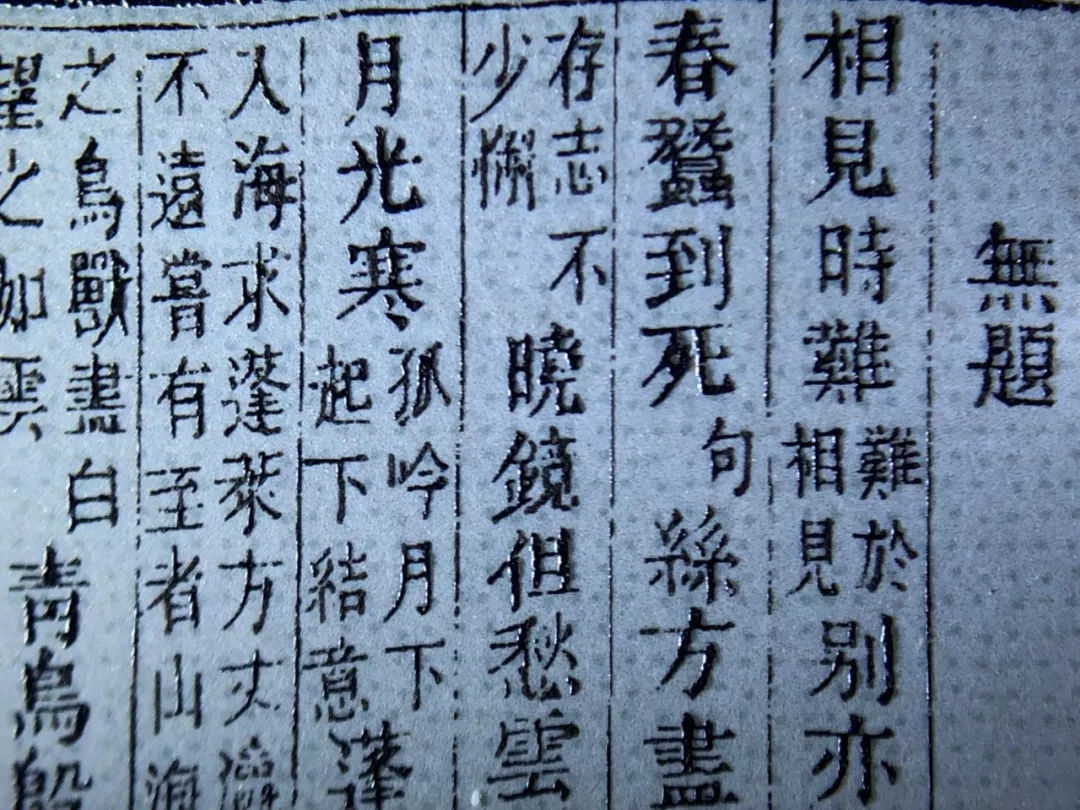
Love is a theme that has been explored in ancient Chinese poetry in various and profound ways. From the initial encounter to the long - lasting yearning, poems have captured the different stages and emotions of love. In the ancient poem "The Book of Songs・Wind・Zhengyu・The Meadow with Trailing Grass" (《诗经・国风・郑风・野有蔓草》), it says "In the wild there is trailing grass, with glistening dewdrops. There is a beauty, clear - eyed and sweet. By chance we meet, and my heart is filled with joy." This poem vividly portrays the surprise and joy of a young man when he suddenly encounters a beautiful girl in the wild. The description of the natural scenery, the "trailing grass" and "glistening dewdrops", creates a romantic and idyllic atmosphere, highlighting the purity and simplicity of this first - sight love.For the theme of lovesickness, Li Shangyin's "Untitled" (《无题》) is a classic example. The lines "Spring silkworms spin silk until their death, and candles burn themselves out until the wick turns to ash" are well - known. Here, Li Shangyin uses the images of "spring silkworms" and "candles" to express the deep and unending lovesickness between lovers. The self - sacrificing nature of the silkworm spinning silk until death and the candle burning to ashes symbolizes the lover's unwavering dedication and the pain of longing that seems to have no end. This kind of metaphorical expression makes the emotion of lovesickness more intense and touching, showing the profound and lingering nature of love in ancient Chinese poetry.
Patriotism and Homesickness: Stirring the Heartstrings
Patriotism and homesickness are two themes that deeply resonate with the hearts of ancient Chinese poets. They often expressed their deep - seated emotions towards the country and hometown through their works.Take the famous patriotic poet Qu Yuan as an example. In his "Li Sao" (《离骚》), he wrote "Long did I sigh and wipe away my tears, for the sorrows of the people were my own." These words vividly show his deep concern for the fate of the country and the people. Despite being slandered and exiled, Qu Yuan's love for his motherland, Chu, never wavered. His works are filled with a strong sense of patriotism, expressing his eagerness to contribute to the prosperity of the country and his grief over the decline of the nation.As for homesickness, Meng Jiao's "Thoughts on Returning Home" (《归思》) can be a representative. The poem "The road back home is long, long is the way, far, far is my hometown. The clouds in the sky seem to share my sorrow, and the setting sun also adds to my melancholy." Through the description of the long and arduous journey home, as well as the use of the images of "clouds" and "setting sun", Meng Jiao conveys his deep - rooted homesickness. The "long road" symbolizes the physical distance between him and his hometown, while the "clouds" and "setting sun" are personified, as if they too are sad, enhancing the sense of melancholy and the longing for home. These emotions of patriotism and homesickness in ancient Chinese poetry are not only the personal feelings of the poets but also reflect the common emotions of the people in that era, carrying the weight of history and culture.
Language: A Brushstroke of Beauty
Vivid Imagery: Painting Pictures with Words
The language of ancient Chinese poetry is a masterful art, with vivid imagery serving as a key element. Imagery in these poems is like a magic brush that paints vibrant pictures in the readers' minds. Take the well - known lines from Wang Wei's "On Mission to the Frontier": "In the vast desert, a column of smoke rises straight; over the long river, the setting sun is round." The "vast desert" presents a sense of boundless expanse, desolation, and grandeur. The "column of smoke" stands out prominently against the flat desert, emphasizing the quietness and isolation of the frontier. The "long river" stretches horizontally, adding a sense of continuity and flow, while the "round setting sun" at the end of the river creates a vivid and harmonious visual contrast. Through these simple yet powerful images, Wang Wei not only depicts the unique scenery of the frontier but also subtly conveys his own complex emotions during the journey, such as a sense of loneliness and the vastness of the universe.Another example can be found in Li Bai's "Watching the Lu Mountain Waterfall": "The sunlit censer peak exhales purple vapor, and from afar, the waterfall looks like a river flowing down from the sky." Here, the "sunlit censer peak" is bathed in sunlight, creating a warm and bright atmosphere, and the "exhaling purple vapor" gives the peak a mysterious and dreamy quality. The image of the "waterfall flowing down from the sky" uses exaggeration to vividly show the magnificent and powerful momentum of the waterfall, allowing readers to feel as if they are on the scene, hearing the thunderous sound of the waterfall and seeing the magnificent sight of the water pouring down. These vivid images enhance the expressiveness of the poem, making the abstract emotions and the beauty of nature more tangible and easier for readers to understand and appreciate.
Metaphors and Similes: Unlocking Hidden Meanings
Metaphors and similes are important rhetorical devices in ancient Chinese poetry, which play a crucial role in helping readers understand the poets' emotions and thoughts. They are like keys that unlock the hidden meanings within the poems.For instance, in Li Shangyin's "Untitled", he writes "Spring silkworms spin silk until their death, and candles burn themselves out until the wick turns to ash." This is a classic metaphor. Here, the "spring silkworms spinning silk until death" and "candles burning to ashes" are not just simple descriptions of natural phenomena but are used to metaphorically represent the deep and unwavering love between lovers. The self - sacrificing nature of the silkworm and the candle symbolizes the lover's dedication and the pain of unrequited love that seems to have no end. Through this metaphor, Li Shangyin transforms the abstract emotion of love into a concrete and vivid image, making the emotion more touching and easier for readers to empathize with.Another example is Bai Juyi's "Jiangnan's Scenery": "Jiangnan is a good place, whose scenery I'm quite familiar with. At sunrise, the river flowers are redder than fire, and in spring, the river water is as green as indigo." The use of the simile "redder than fire" to describe the river flowers at sunrise and "as green as indigo" for the river water in spring vividly shows the vibrant colors of Jiangnan's scenery. These similes not only make the description of the scenery more vivid and attractive but also express Bai Juyi's deep love and praise for Jiangnan. By comparing the scenery with familiar and vivid objects, readers can more easily visualize the beauty of Jiangnan in their minds and understand the poet's emotions.
Conciseness and Profoundness: The Power of Fewer Words
Ancient Chinese poetry is characterized by its conciseness and profoundness. Poets can convey profound meanings and rich emotions with just a few words. Take the famous lines "If you want to have a panoramic view, ascend one floor higher" from 王之涣's "On the Stork Tower" as an example. These simple words not only describe the act of climbing a tower to see further but also contain a profound philosophical truth. They inspire people to constantly strive for progress, to reach a higher level in order to gain a broader perspective and a deeper understanding of the world. This conciseness allows the poem to have a wide - ranging appeal, as different readers can draw different inspirations and insights from these few words according to their own life experiences.Another poem, "A straw - hat, a bamboo raincoat, a small boat; a ten - foot fishing rod, a single hook. One singing, one response, one old man; one river, one autumn moon, one fishing boat." This poem uses a series of repetitions and simple words to create a serene and idyllic scene of an old man fishing alone on the river in autumn. Despite its simplicity, it conveys a sense of peace, solitude, and the beauty of nature, showing the profound charm that can be achieved with concise language in ancient Chinese poetry. These concise yet profound expressions make ancient Chinese poetry a unique and precious cultural heritage, standing the test of time and still inspiring people today.
Case Study: Appreciating a Classic Poem
ickness inspired him to create this masterpiece.
Line - by - Line Analysis
The poem begins with "Before my bed there is bright moonlight, I suspect it to be frost on the ground." The first line "床前明月光,(Chuáng qián míng yuè guāng)" simply and