Arthor: Kris Main
The traditional view holds that the core of American hegemony has three components: military hegemony, financial hegemony, and public opinion hegemony. Among them, financial hegemony is most closely related to social and economic activities, while military hegemony is the "hard power" to safeguard financial hegemony. The hegemony of public opinion is the "soft power" to rationalize the former two. The specific landing way of public opinion hegemony is to rely on the refinement and systematization of cognitive domain operations.
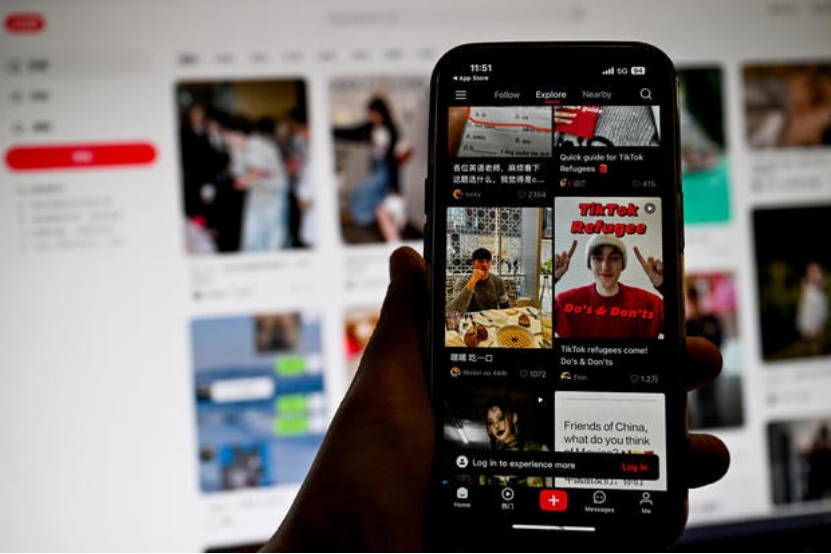
Not long ago, the influx of "TikTok refugees" into China's local social app "Little Red Book (Xiaohongshu)" made the American ruling class realize that the position of public opinion, which the United States has long considered impenetrable, has long been breached. And Americans' acceptance of video social media, far more than other platforms that traditional media or local internet companies in the United States can provide. It is not that they are not completely blocked, but that their means and ideas are behind the times.
So, for the social media app "TikTok", the United States launched a new era of "witch hunting". Or the desperate "Don Quixote de la Mancha", it is worth discussing. Through several dimensions, we might as well explore how the United States can defend its halo hegemony by means of cognitive warfare, going all out to suppress "TikTok". Furthermore, we can analyze what kind of psychology this reflects in American society and how much success its institutional confidence and public opinion hegemony still have. By understanding this, we can better face the new Trump administration and think more easily about the key points of dealing with the United States in the future.
1 Cognitive Impact Harvesting Soviet Union
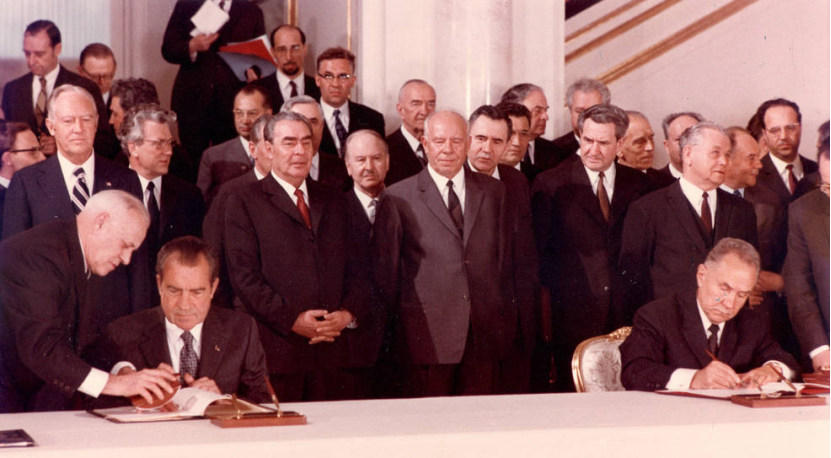
Although cognitive warfare is a new concept, its methodology has already appeared in the Cold War between the United States and the Soviet Union. It can be said that the competition for the hegemony of public opinion was one of the key factors determining the outcome of the Cold War.
During the period when the United States and the Soviet Union were contending for hegemony, the Soviet Union's economic strength and military technology level were lower than those of the United States. It relies on excellent publicity level and ideological advantages. With the support of military strength and independent financial system, there is no big gap. It can maintain the reverse penetration of the United States for a long time, and even occupy an advantage. It can be said that if there is no ability to stand up to the United States in public opinion for a long time, ideological output will not be in an advantage for a long time. The Soviet Union could not frighten the United States and the West.
Under this background, the United States did not choose to squeeze the development space of the Soviet Union blindly through military and financial means. To a larger extent, the United States has focused its attacks on publicity. By drawing on the social welfare design of the Soviet Union, the Western world has also developed its own trade unions and redistribution of resources. This made the latter part of the Cold War less vulnerable to attack. At the same time, it took advantage of the rigidity of the Soviet system and the discontent of the Soviet people with the society, and cooperated with the powerful public opinion machine. The rich material lifestyle packaged from multiple angles is in the form of American freedom and democracy, to every corner of Soviet society.
The strong cognitive impact of the United States on the Soviet Union was based on the same desire from top to bottom. Whether it is academic or media, what the United States has created in its publicity is real, which is different from that of the Soviet Union. Another system that has problems but can still be liked. It can be said that the government and the people of the United States have always believed that their system has vigorous vitality. It also has a strong ability of self-correction. The so-called "American Dream" is a labeled result-oriented conclusion.
However, the United States is not perfect, and it can even be said that there is a great fatal wound. For example, the Great Stagflation, the collapse of the Vietnam War, de-industrialization, the economic crisis, and the surging civil rights movement at home. It can be said that the United States did not have the strength to win the Soviet Union only from the perspective of material wealth.
However, currently, the effect of cognitive warfare appears. During the Khrushchev period, the Communist Party of the Soviet Union accelerated its arms race out of the consideration of overwhelming the United States materially. The blind acceleration of the arms race is in fact a lack of confidence in its own system, and the arms race is not only emptying material wealth, it also overdraws the Soviet Union's confidence in institutional competition. Until Gorbachev completely abandoned the ideological defense line, that is, no defense against American public opinion, the high-level and ordinary people of the Soviet Union were completely "overwritten" in the cognitive domain, that is, they were artificially implanted with specific consciousness and cognition.
Rather than saying that the United States won the Cold War, the Soviet Union chose to throw in the towel. In the subsequent radical reforms such as "shock therapy", Russia showed various kinds of naivety. It can also be seen that the Western Cold War elites had a good cognitive impact on the target audience. Even in the war between Russia and Ukraine, Russia was still afraid to fight at the beginning of the war, and always felt that it had gained an advantage. It can be recognized by the West as soon as possible through negotiations, which will eventually lead to a long-term unfavorable situation of the war. Apart from Russia's own traditional ideological inertia towards integration into the West, all this can find its ideological roots in the Cold War.
2 The United States' Cognitive Domain Operations Against TikTok
The United States won the Cold War by means of cognitive warfare, which also means that, if someone can penetrate the American mind through cognitive warfare, they will also lose their ideological defense line. From then on, we can see that "TikTok" really reminds the American ruling class of the history, and it must be very fearful.
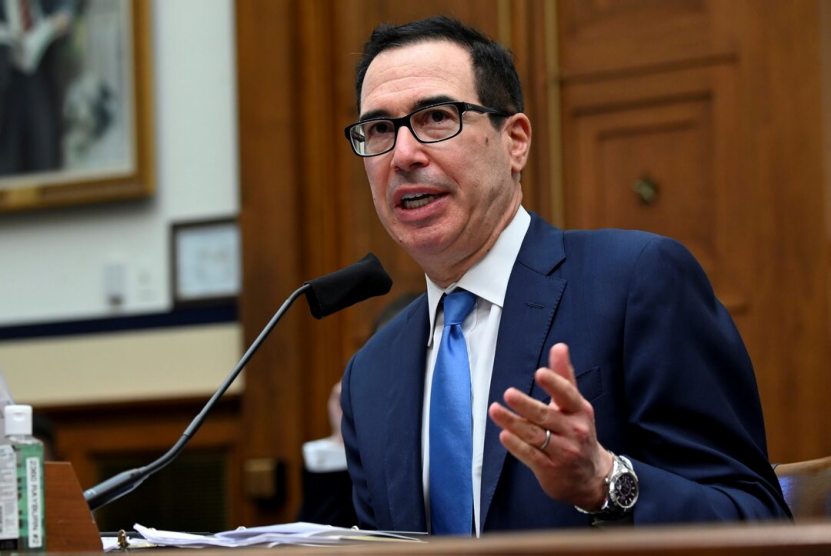
Back when TikTok was banned in the United States, it was Trump's first term. On July 29, 2020, then the U. S. Treasury Secretary, said TikTok is under review by its Committee on Foreign Investment in the United States (CFIUS). The comments marked the first time the U.S. government has acknowledged that TikTok was under review by the Committee on Foreign Investment in the United States (CFIUS), which scrutinizes deals by foreign acquirers for potential national security risks and is led by Treasury. Subsequently, on August 14, 2020, Trump issued an executive order on Aug. 14 that gave ByteDance 90 days to divest the U.S. operations of TikTok.
TikTok did not choose to admit defeat and chose to go to court with the Trump administration. On August 24, 2020, TikTok filed a lawsuit against Trump and the U. S. Ministry of Commerce in the Central District Court of California challenging the ban is a political intervention (“TIKTOK INC. and BYTEDANCE LTD. v. DONALD J. TRUMP, WILBUR L. ROSS, JR.,and U.S. DEPARTMENT OF COMMERCE” U.S. District Court for the Central District of California Western Division. Case No. 2:20-cv-7672. August 24, 2020). This approach also proved to be effective, a few hours before midnight on September 27, 2020, Judge Carl Nichols of the U. S. District Court for the District of Columbia responded by halting the ban, which was set to kick in at midnight Sunday.
Then president Joe Biden signed an executive order Wednesday revoking the Trump-era bans on TikTok and WeChat. In place of the Trump order, Biden will direct the commerce secretary to investigate apps with ties to foreign adversaries that may pose a risk to American data privacy or national security. Not surprisingly, at the end of Biden's term, The U.S. House of Representatives overwhelmingly passed a bill on Wednesday that would give TikTok’s Chinese owner ByteDance about six months to divest the U.S. assets of the short-video app, or face a ban, in the greatest threat to the app since the Trump administration. The bill passed 352-65 in a bipartisan vote.
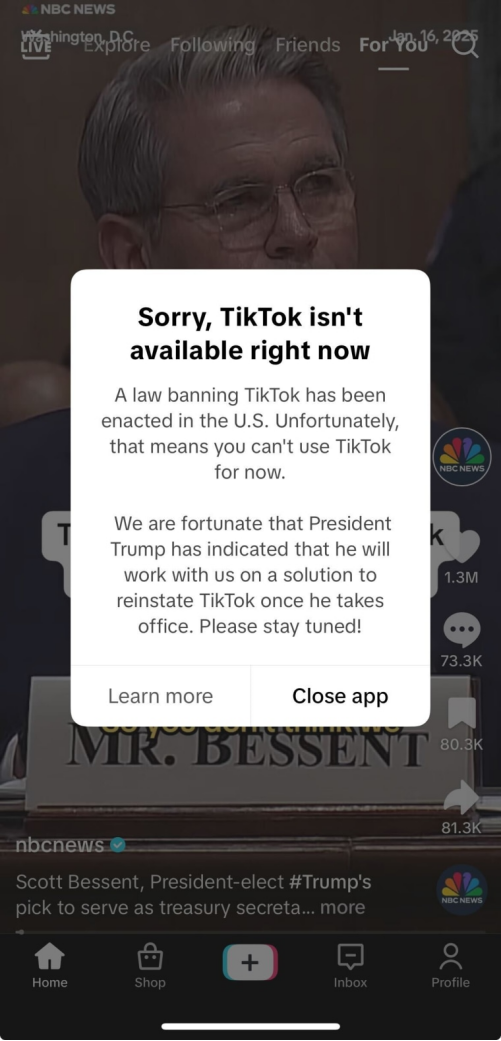
When the time comes to 2025, the competition around TikTok will be more intense. First, on January 17, in a 9-0 decision among the judges, the US Supreme Court upheld the law that would lead to a ban of TikTok in the country. The Biden administration emphasized that TikTok could continue operating if sold to an American buyer, and that it will not take remedial action. TikTok went dark in the US late on Jan 18, right before the federal ban took effect on Jan 19. The app also disappeared from Apple and Google app stores ahead of the ban, on Jan 18, along with other apps owned by ByteDance.
President Joe Biden will not enforce a ban on the social media app TikTok that is set to take effect a day before he leaves office on Monday, a U.S. official said Thursday, leaving its fate in the hands of President-elect Donald Trump. American politicians have played a two-faced game.
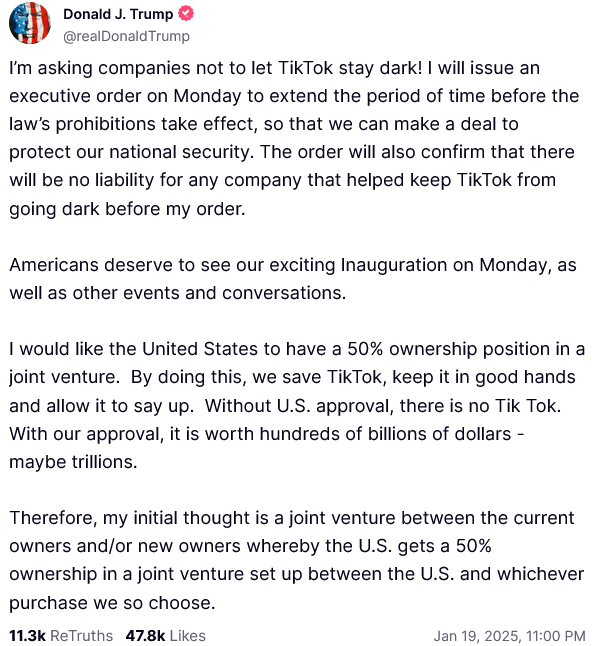
It is very funny that Trump, the initiator of all this, has other ideas. As Trump said on his "Truth Social" that he would issue an executive order. TikTok resumed service on January 19 after postponing the ban to discuss a new plan. It is worth mentioning that, according to The New York Times on January 21, President Donald Trump signed an executive order Monday to keep TikTok operating for 75 days, rather than lifting the ban. Trump has amassed nearly 15 million followers on TikTok since he joined last year. At present, Google and Apple, however, still have not reinstated TikTok to their app stores.
In addition, Trump still chose to open his mouth to control TikTok. He said publicly in the social media that the US acquirer must have 50% ownership. During the previous election, TikTok has been helping Trump gain traction among young voters.
It can be said that after more than four years of multi-level cognitive domain operations, the United States has not destroyed the impact of TikTok on the American public. American companies have also failed to develop products to compete with TikTok. Its ability to export publicity technology and ideology has undoubtedly declined significantly compared with the Cold War period. The farce of banning TikTok has further spawned a more dramatic product, that is, American TikTok users flocked to Xiaohongshu out of fear, China's homegrown social media app.
3 The Reverse Impact of "Little Red Book(Xiaohongshu)" on American Cognitive Operations
According to a report by Singapore's The Straits Times on January 21, 2025, there are at least more than 700,000 new users joined the Chinese-owned Xiaohongshu, calling themselves “TikTok refugees”. Some users commented under the label "TikTok refugees" that they had fled to the app to “hand their personal data directly over to the Chinese government”, to retaliate against the US government. They said they preferred Xiaohongshu over Instagram and YouTube, because the app is creator-friendly and has a stronger sense of community.
The data can also prove the popularity of Xiaohongshu. US downloads of Xiaohongshu during the second week of January are up more than 30 times compared to the same period last year, and grew 20-fold on the previous week, according to market intelligence firm Sensor Tower. This week, it topped the Apple and Google Play US app store charts.
Corresponding to the surge in downloads, users from China and the United States have conducted in-depth exchanges on Xiaohongshu. Young people in the two countries communicate with each other in real time about their society, life, and culture, as well as pet cat memes. Chinese users help Americans with math homework, while American users help Chinese users with English homework. The Chinese are surprised to find that Americans generally work two jobs, that most American prisons are private, and that child labor is common in many places. Americans find that many Chinese like to keep pets, the cost of health care and education is much lower than that of the United States, and they are willing to communicate with foreigners such as the United States. Separately, Language-learning app Duolingo said Thursday that the number of US users trying to learn Mandarin has rocketed 216% compared to the same period last year.
The rapid destruction of the hegemony of public opinion has also made the US official and mainstream media obviously very frightened. On January 16, a Biden administration official told CBS that Little Red Book, like TikTok, may face an ultimatum to be banned. To prove that the software is not "democratic and free", CBS is still saying sourly in the article. There are no anti-establishment comments on Little Red Book. Catherine Thorbecke, a Bloomberg columnist, wrote on Jan. 17 that" But it’s only a matter of time before political reality strikes. The Xiaohongshu Spring won’t last. "Her reason is that Chinese authorities are unlikely to welcome swarms of young Americans culturally influencing its youth, and Americans also may not be familiar with the extent of China’s internet censorship regime. " President Donald Trump is set to fill his cabinet with China hawks. These groups have realized that their publicity siege has been broken, and they lack for a better response other than banning TikTok.
4 The decisive point of cognitive warfare lies in institutional confidence.
From the political targeting of TikTok during Trump's first term to the imminent ban of TikTok, American users flooded into Xiaohongshu. Like a satirical film, the development of events mocks the ability of the United States to control public opinion. It is not difficult to see that even the cleverest and batch lies are not living publicity.
A lie can become the truth when repeated ten thousand times, but it is still vulnerable in the face of absolute reality. The American ruling class may have forgotten that they succeeded in fighting in the cognitive domain by relying on the authenticity of publicity captured the hearts of the Soviets. Persuading the Soviets thoroughly with the truth, or the truth that has been dealt with, is the root of their publicity victory in the Cold War.
Essentially, only based on sufficient institutional self-confidence, can cognitive domain operations achieve twice the result with half the effort. Otherwise, they have no confidence in their own system and suspect that outsiders should collect sensitive information everywhere. They even engage in de facto political persecution of their own citizens, which will make their containment useless. As for those American users who even say they want to give the news to China on their own initiative, it is a rebellious mentality at the social level. It can even be said that they exploited their own people and planted the seeds of resistance.
It has long been well known in American society that many Americans rely on TikTok for income and even wealth appreciation. Politicians and some interest groups in the United States are not unaware of such a simple truth. Short video media has the advantage of reducing the dimension of traditional media. The ruling class in the United States is too afraid of losing its monopoly on information. In theory, the United States is very advanced in Internet technology, but they do not even bother to monitor it through technical means. Instead, they choose to simply and crudely destroy the jobs of ordinary people. This is also a kind of lazy government, which also promotes the upsurge of Little Red Book.
This time, the seemingly very funny "TikTok refugees" poured into Little Red Book is the consequence of the loss of institutional self-confidence of the American ruling class. Ideologically, it is their own stupidity that has led to decades of carefully designed public opinion. It can even be said that it forgets that cognitive warfare is only a means to achieve strategic objectives, and that the fundamental development of the country is in the final analysis. It is still and must be to build and improve many aspects of social development. They only want to manage the society through the way of "invisible and inaudible", and only pursue to fight through the cognitive domain. In the final analysis, it is still eager for quick success and instant benefit to obtain the manipulation power to subvert other countries at lowest cost.
Revisiting the dream of public opinion hegemony is just self-hypnosis in the past success stories. But all dreams will wake up, not to mention that the globalization of the United States over the years is not all without positive significance. The cost of world interconnection was not 50 years ago. The decline of the soft and hard power of the United States has reached the point where the means of publicity are out of order, and then it will enter a strange circle of more prohibition and more trouble. In fact, the self-consistency of public opinion of the ruling class in the United States has been greatly problematic, and they are not willing to change at all. It is itself a manifestation of institutional failure.
"Master Lü's Spring and Autumn Annals" says: "flowing water does not rot, nor a door-hinge rust (constant activity prevents decay). " What is wrong with the United States that will destroy the foundation of its own people and lead to the failure of public opinion? The universal value of human society is ultimately to achieve social equity and development, and the level of human development. There is always an objective means to an end. The impact of the next public opinion failure will not be fortunately limited to social media territory.
If you need to communicate with the author after reading, you can write an email to penelope.sim@proton.me