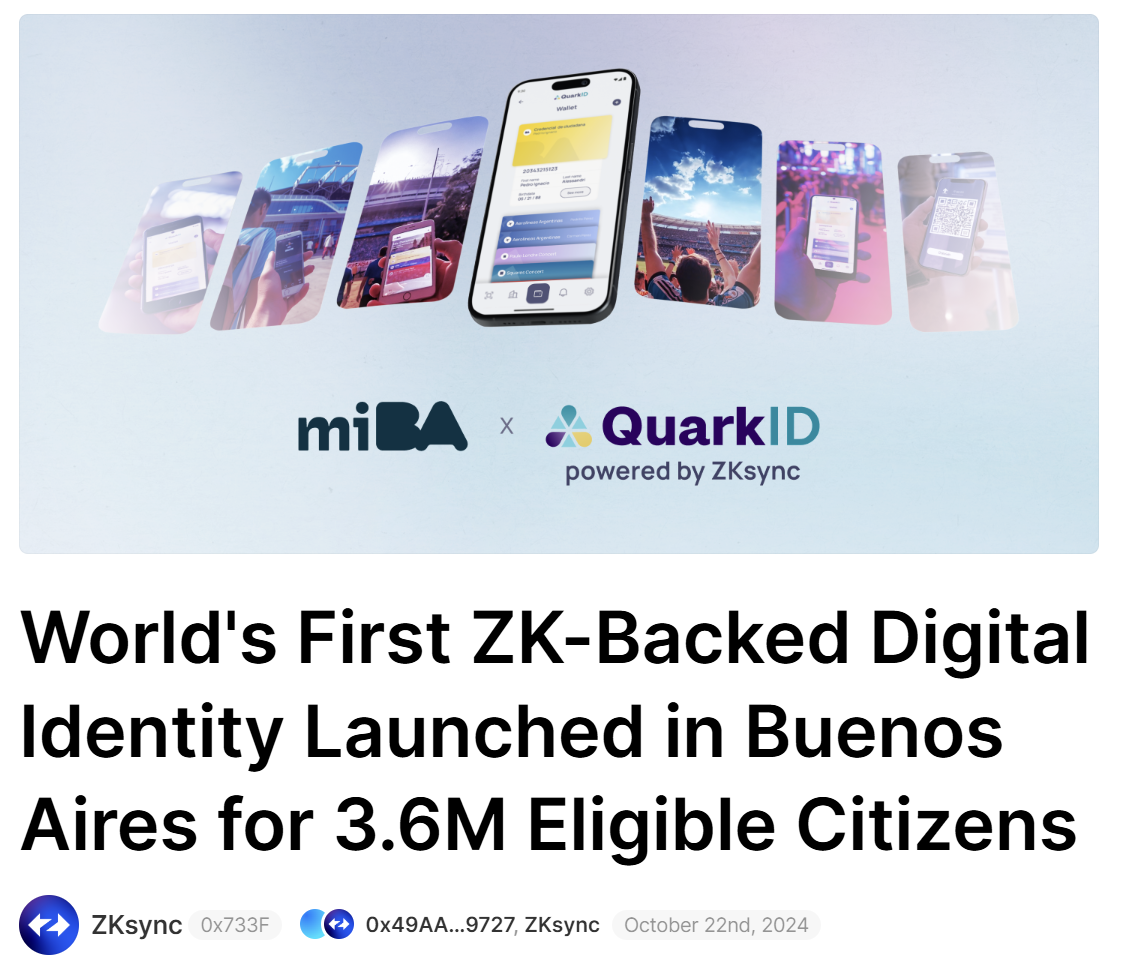
In October 2024, Buenos Aires launched a program to give residents greater control over their data. Using a decentralised identity (DID) system built with ZKsync and QuarkID, the city aimed to create a secure and efficient way for individuals to manage their information.
In just three months, the program has reached 10% of its target, a significant step in its rollout. This article takes a closer look at how the initiative was carried out, the results it has achieved so far, and why it represents an important development in public data management.
Buenos Aires’s DID Program
In October 2024, Buenos Aires introduced a new way for its citizens to manage personal information through a decentralized identity system. Built into the city’s existing miBA platform, the system was developed in partnership with ZKsync and QuarkID.
This program aimed to give residents direct control over important documents like birth certificates, tax records, and education credentials, making them accessible anytime from a mobile app or computer.
The program works by assigning each citizen a unique digital identifier stored securely on a blockchain.
Unlike traditional systems where governments control and monitor how personal data is used, this approach ensures that only the individual has access to their information.
Residents can prove details like their age or citizenship without sharing unnecessary personal data, offering more privacy and security.
The rollout was designed to be simple and user-friendly. Citizens didn’t need to learn about blockchain or handle complicated processes. They experienced the benefits directly—fewer trips to government offices, shorter wait times, and secure access to services.
This program represents a major step forward in how governments can use technology to make public services more accessible while respecting privacy and giving people ownership of their data.
Recent Accomplishment
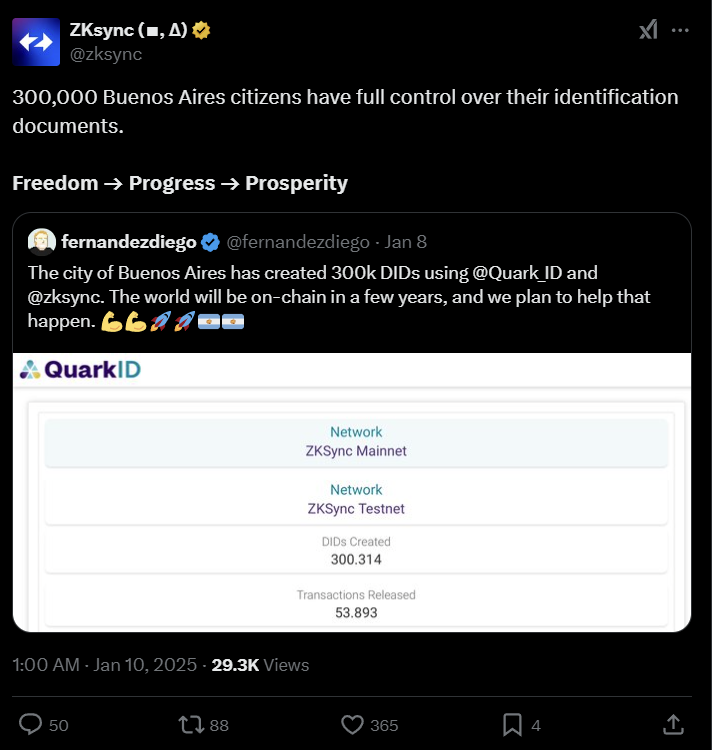
Buenos Aires’s decentralized identity program has reached a significant milestone, with more than 300,000 decentralized identifiers (DIDs) created in just three months.
This progress was highlighted in a tweet from Diego Fernández, the former Secretary of Innovation & Digital Transformation of the Buenos Aires City Government and the co-founder of QuarkID, who shared that the initiative is steadily moving toward its target of 3.6 million DIDs, equivalent to the city’s population.
This accomplishment reflects the growing acceptance of decentralised technologies within public services.
By allowing citizens to control their identification documents securely, Buenos Aires has taken a significant step toward modernising data management.
The adoption rate of the program also demonstrates a shift in public trust toward blockchain-based solutions, showing that such technology can be seamlessly integrated into government initiatives.
The success of this program not only represents an achievement for Buenos Aires but also serves as an example for other governments exploring decentralised systems. It highlights the potential of blockchain to deliver practical, scalable solutions that prioritise individual control and privacy.
What is QuarkID?
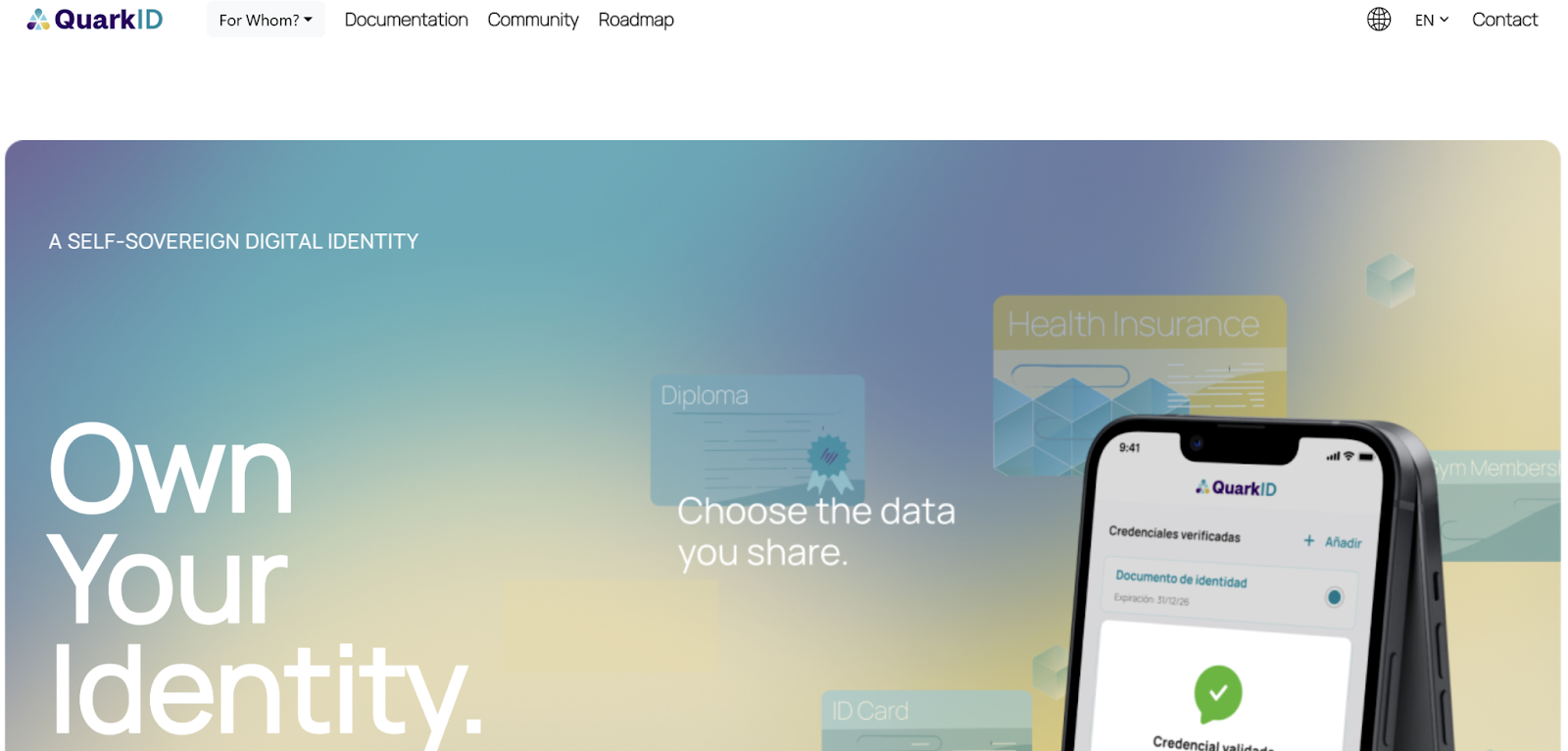
The decentralised identity program in Buenos Aires is made possible by QuarkID. QuarkID is a system designed to give individuals complete control over their digital identities.
Its goal is simple, which is to let you decide who can access your information and when without relying on third parties like governments or corporations to manage it for you.
QuarkID works by creating a digital version of your important documents, like birth certificates or proof of residency.
Instead of carrying physical papers or sharing unnecessary details, you can share only what’s needed, for example, confirming your age without disclosing your full name or address. Everything is stored securely, reducing the risks of misuse or identity theft.
What sets QuarkID apart is that it puts the power back into your hands. Unlike traditional systems where your information is stored and managed on central servers, QuarkID allows you to keep and control your data directly.
It’s easy to use and works across different platforms, whether for government services or other organisations.
In essence, QuarkID makes managing your identity simpler, safer, and fully under your control, no matter where or how you use it.
Why ZKsync is the Perfect Fit for Buenos Aires’s Identity Program
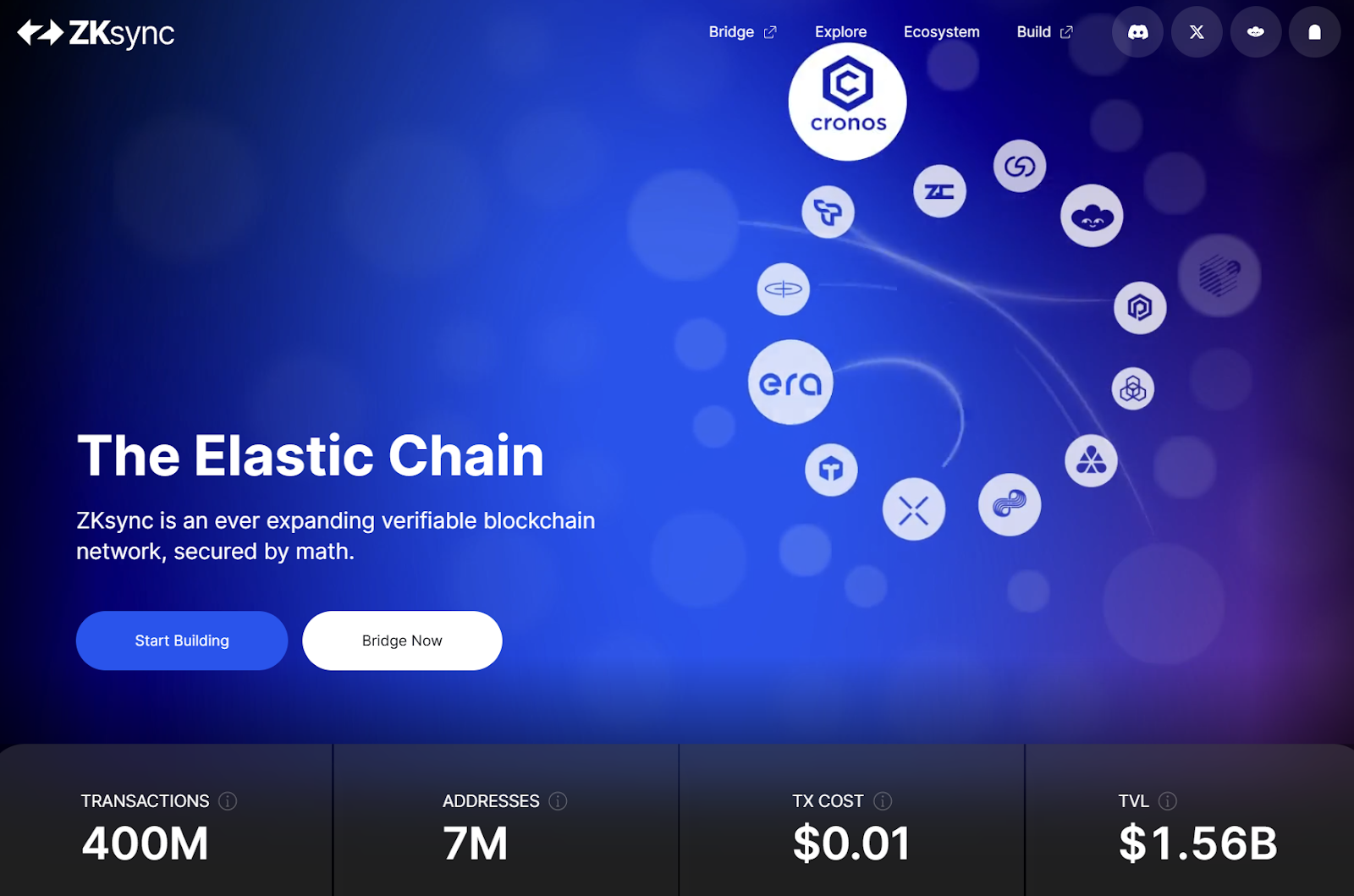
ZKsync is at the heart of Buenos Aires’s decentralized identity program because it addresses the key challenges of privacy, security, and scalability while keeping the system user-friendly.
Its innovative use of zero-knowledge proofs allows citizens to prove details, like their age or residency, without revealing personal data. This ensures that sensitive information stays private, making ZKsync the ideal solution for a program designed to protect individual control over data.
Security is another major reason why ZKsync stands out. Traditional identity systems store data in centralised databases, making them vulnerable to breaches and misuse.
With ZKsync, personal information isn’t stored in one place, it stays with the individual. Even the government doesn’t have visibility into how or when credentials are used.
This shift eliminates unnecessary oversight, protects data from potential threats, and empowers citizens with true ownership of their information.
Perhaps the most impressive aspect of ZKsync is its ability to scale. For a city like Buenos Aires, with over 3.6 million residents, handling millions of transactions seamlessly is a must.
ZKsync’s Layer 2 infrastructure processes these transactions quickly and affordably, ensuring the program can grow without compromising performance.
What truly sets ZKsync apart is how it integrates advanced technology into everyday life without overwhelming users. Citizens don’t need to understand the complexities of blockchain to benefit.
The program’s integration with miBA offers a simple, efficient way to access services and manage credentials. ZKsync makes it possible for Buenos Aires to deliver a forward-thinking identity solution that’s secure, scalable, and easy to use.
Conclusion
Buenos Aires’s decentralised identity program is a remarkable example of how blockchain technology can transform public services.
By leveraging QuarkID and ZKsync, the city has empowered its residents with secure, user-friendly tools to manage their personal information.
In just three months, the program has reached over 300,000 citizens, demonstrating both its effectiveness and public trust in the system.
This initiative sets a precedent for other governments, showing that decentralized solutions are not only practical but scalable. As the program continues to grow, it highlights the potential for technology to create a future where data privacy and control truly belong to individuals.