

Hiking is a pleasant activity, which can bring a lot of happiness.
First, the relaxation and relaxation of body and mind
Body level
During the hiking, every cell in the body seems to be awakened. Muscles contract and relax rhythmically, and feet alternately touch the ground. This regular exercise is like giving the body a deep massage. For example, when you are hiking along a mountain trail, the muscles in your legs will constantly exert their strength to drive your body forward, which will help promote blood circulation and make all organs of your body get enough oxygen and nutrition. Walking for a long time can also enhance the endurance and strength of the body and make it healthier.
Breathe fresh air when hiking, especially in natural environment such as forest or seaside. The forest is rich in negative oxygen ions, and every breath is like cleaning the lungs, which makes people feel refreshed. The air by the sea has a slight salty taste, mixed with the breath of sea breeze, which can make the respiratory tract get an unprecedented comfortable experience.
Psychological level
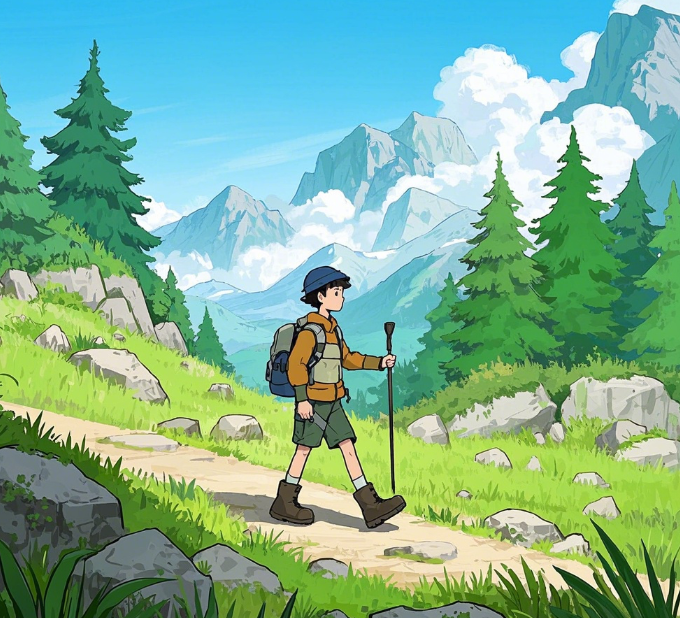
Being away from the hustle and bustle of the city and the pressure of work can make people's hearts get a moment of peace. Hiking is like entering an isolated world, where you can leave your troubles and worries behind. When you are traveling in the mountains or walking in the fields, only the wind, birds singing or your own footsteps are in your ears. This quiet atmosphere can make your brain empty and relieve anxiety and tension.
Hiking is a good opportunity to talk to your heart. In this process, you can think about all kinds of problems in your life, or you can just enjoy the peace of the moment without thinking about anything. For example, when you walk alone in an ancient village and look at those ancient buildings and quiet alleys, your thoughts will drift away unconsciously, recalling the good old days or looking forward to your future life.
Second, the fun of exploration and discovery
Appreciation of natural scenery
Hiking allows you to get close to all kinds of magnificent natural scenery. Hiking in the mountains, you can enjoy the rolling mountains, with different shapes of peaks, some of which are like swords going straight into the sky, and some of which are like sleeping beauty lying on the earth. The streams in the mountains are gurgling and crystal clear, and the streams jump between stones, splashing crystal clear water. When you hike along the stream, you can even feel the coolness of the stream.
Walking by the sea is another scene. The golden beach is shining in the sun, and the waves are coming in waves, flapping on the shore and making a loud noise. The sea level in the distance meets the sky, and the beautiful scenery of the sea and the sky is intoxicating. Moreover, you can also find traces of various marine life such as shells and conchs on foot by the sea. These small discoveries will bring you unexpected surprises.
Exploration of human landscape
Hiking often takes you through ancient towns, villages or historical sites. In these places, you can see ancient architectural styles, such as medieval castles in Europe, whose thick walls and towering towers have witnessed the vicissitudes of history. In some ancient towns in China, the bluestone roads and ancient wooden buildings are full of quaint atmosphere, and the decorative details such as carvings and paintings on the buildings are rich in cultural connotations, and every place is telling stories of the past.
You can also get in touch with the customs of different places. For example, in some villages where ethnic minorities live in compact communities, you may catch up with the local traditional festivals, see the villagers wearing colorful ethnic costumes, singing and dancing, and experience the unique national culture.
Third, social happiness
Hiking can be a group activity, and you can embark on a journey with friends, family or hiking enthusiasts. During the hiking, everyone encouraged and helped each other. When someone is exhausted, others will lend a helping hand; When encountering beautiful scenery, everyone will share the joy together. This kind of interaction and support between teams can enhance their feelings.
You can also meet people from different backgrounds by participating in activities organized by hiking clubs. During the hiking break, everyone will sit around and share their hiking experiences and life stories. These exchanges not only broaden the social circle, but also let you know about different people's ideas and lifestyles.
Here are some things to pay attention to: I. Preparation before departure Planning route Choose a suitable hiking route according to your physical strength, experience and time. You can refer to hiking books, websites, mobile phone applications, etc. to learn about the difficulty level, length, altitude change, estimated time, water sources, rest points and potential dangers along the route. For example, for beginners, it is more appropriate to choose a flat, short-distance and clearly marked route, such as the loop of a city park or a country road. Study the local weather and topography. Avoid hiking in bad weather (such as rainstorm, blizzard, strong wind, etc.). If you want to go to mountainous areas, pay special attention to whether there are risks of natural disasters such as landslides and mudslides. At the same time, understanding the terrain helps to prepare suitable equipment, such as shoes with good anti-slip performance when hiking on rugged mountain roads and waterproof boots when hiking in wetlands. Equipment preparation Shoes: This is one of the most important equipment for hiking. Choose a pair of walking shoes that fit, are comfortable, have good support and anti-skid performance. If you are hiking for a long distance or carrying weight, it is recommended to choose high-heeled shoes, which can better protect your ankles. It is best to run in new shoes for a period of time in advance to avoid rubbing your feet during hiking. Clothing: Wear light, breathable, windproof and waterproof clothing. Layered wearing is a better strategy, so it can be flexibly adjusted according to the weather and physical condition. For example, the inner layer can wear sweat-wicking quick-drying clothes, the middle layer can wear warm fleece clothes, and the outer layer can wear windproof and waterproof jacket. Pants should be elastic and wear-resistant, and jeans should be avoided, because they are not easy to dry after being wet and will affect actions. Backpack: A suitable backpack can evenly distribute the weight and reduce the burden on the body. The capacity of the backpack should be selected according to the length of the trip and the number of items carried. Generally speaking, it is enough to choose a backpack of 20-30 liters for one day's hiking, and a backpack with larger capacity is needed for many days' hiking. Adjust the shoulder straps, belts and chest straps of the backpack to ensure that the backpack is close to the body, and the weight is mainly distributed in the buttocks. Other equipment: bring enough water and food. If there is water, it is generally recommended that each person carry at least 2 liters of water every day. If the weather is hot or the journey is difficult, it is necessary to increase the amount of water. Choose high-energy and digestible foods, such as nuts, energy bars and dried meat. You should also bring maps, compasses (or GPS devices), flashlights (spare batteries), first aid kits, multifunctional knives, lighters or matches, rain gear and other necessary items. Physical preparation Before hiking, do some exercises to enhance physical strength and endurance, such as brisk walking, jogging, climbing stairs, etc. If you have any health problems, such as heart disease, high blood pressure, etc., it is best to consult a doctor before hiking to ensure that your physical condition can adapt to hiking. Second, in the process of hiking Keep the rhythm When you start hiking, don't hurry, but keep a steady and comfortable pace. Generally speaking, small strides and high-frequency steps are more labor-saving and can reduce the impact on the knees. Arrange rest time reasonably according to your own physical strength to avoid excessive fatigue. It is more appropriate to rest for 10-15 minutes every 1-2 hours of walking. caution Walk strictly according to the planned route, don't deviate from the route at will, and avoid getting lost or falling into dangerous areas. If you encounter an unmarked fork in the road, look at the map carefully or use GPS equipment to confirm the direction. Be especially careful when crossing rivers, climbing steep slopes and other dangerous areas. When crossing the river, you should first observe the depth, velocity and bottom of the water, and it is best to use trekking poles to keep balance. When climbing a steep slope, use your hands and feet to find a stable support point. Pay attention to the surrounding environment and guard against the attack of wild animals. If you are hiking in an area where wild animals are infested, don't provoke them actively, try to keep your distance and avoid carrying food with strong smell, because it may attract wild animals. protect the environment Respect nature, don't destroy vegetation, and don't trample flowers and plants at will. Minimize the impact on the environment, put the garbage into garbage bags, take it out of the field, and don't throw it away at will. If you need to camp, you should choose a designated camping area to avoid damaging the natural landscape. Third, after the hike, Body recovery After hiking, change wet clothes in time to avoid catching cold. You can do some simple stretching exercises to help relax your muscles and relieve muscle soreness. For example, stretch the quadriceps femoris, hamstring muscles, calf muscles, and muscles of the waist and back. Equipment sorting and inspection Clean and inspect the equipment to see if it is damaged or lost. If any equipment needs to be repaired or replaced, it should be handled in time to prepare for the next hiking trip.
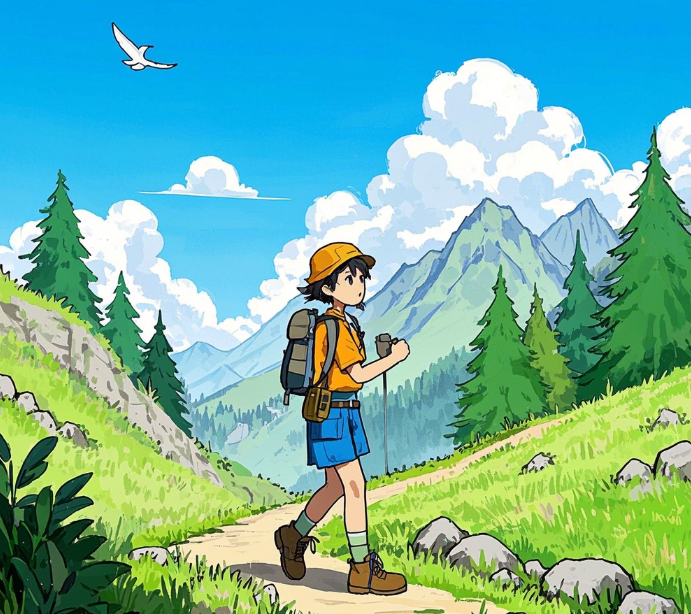
Here are some things to pay attention to: I. Preparation before departure Planning route Choose a suitable hiking route according to your physical strength, experience and time. You can refer to hiking books, websites, mobile phone applications, etc. to learn about the difficulty level, length, altitude change, estimated time, water sources, rest points and potential dangers along the route. For example, for beginners, it is more appropriate to choose a flat, short-distance and clearly marked route, such as the loop of a city park or a country road. Study the local weather and topography. Avoid hiking in bad weather (such as rainstorm, blizzard, strong wind, etc.). If you want to go to mountainous areas, pay special attention to whether there are risks of natural disasters such as landslides and mudslides. At the same time, understanding the terrain helps to prepare suitable equipment, such as shoes with good anti-slip performance when hiking on rugged mountain roads and waterproof boots when hiking in wetlands. Equipment preparation Shoes: This is one of the most important equipment for hiking. Choose a pair of walking shoes that fit, are comfortable, have good support and anti-skid performance. If you are hiking for a long distance or carrying weight, it is recommended to choose high-heeled shoes, which can better protect your ankles. It is best to run in new shoes for a period of time in advance to avoid rubbing your feet during hiking. Clothing: Wear light, breathable, windproof and waterproof clothing. Layered wearing is a better strategy, so it can be flexibly adjusted according to the weather and physical condition. For example, the inner layer can wear sweat-wicking quick-drying clothes, the middle layer can wear warm fleece clothes, and the outer layer can wear windproof and waterproof jacket. Pants should be elastic and wear-resistant, and jeans should be avoided, because they are not easy to dry after being wet and will affect actions. Backpack: A suitable backpack can evenly distribute the weight and reduce the burden on the body. The capacity of the backpack should be selected according to the length of the trip and the number of items carried. Generally speaking, it is enough to choose a backpack of 20-30 liters for one day's hiking, and a backpack with larger capacity is needed for many days' hiking. Adjust the shoulder straps, belts and chest straps of the backpack to ensure that the backpack is close to the body, and the weight is mainly distributed in the buttocks. Other equipment: bring enough water and food. If there is water, it is generally recommended that each person carry at least 2 liters of water every day. If the weather is hot or the journey is difficult, it is necessary to increase the amount of water. Choose high-energy and digestible foods, such as nuts, energy bars and dried meat. You should also bring maps, compasses (or GPS devices), flashlights (spare batteries), first aid kits, multifunctional knives, lighters or matches, rain gear and other necessary items. Physical preparation Before hiking, do some exercises to enhance physical strength and endurance, such as brisk walking, jogging, climbing stairs, etc. If you have any health problems, such as heart disease, high blood pressure, etc., it is best to consult a doctor before hiking to ensure that your physical condition can adapt to hiking. Second, in the process of hiking Keep the rhythm When you start hiking, don't hurry, but keep a steady and comfortable pace. Generally speaking, small strides and high-frequency steps are more labor-saving and can reduce the impact on the knees. Arrange rest time reasonably according to your own physical strength to avoid excessive fatigue. It is more appropriate to rest for 10-15 minutes every 1-2 hours of walking. caution Walk strictly according to the planned route, don't deviate from the route at will, and avoid getting lost or falling into dangerous areas. If you encounter an unmarked fork in the road, look at the map carefully or use GPS equipment to confirm the direction. Be especially careful when crossing rivers, climbing steep slopes and other dangerous areas. When crossing the river, you should first observe the depth, velocity and bottom of the water, and it is best to use trekking poles to keep balance. When climbing a steep slope, use your hands and feet to find a stable support point. Pay attention to the surrounding environment and guard against the attack of wild animals. If you are hiking in an area where wild animals are infested, don't provoke them actively, try to keep your distance and avoid carrying food with strong smell, because it may attract wild animals. protect the environment Respect nature, don't destroy vegetation, and don't trample flowers and plants at will. Minimize the impact on the environment, put the garbage into garbage bags, take it out of the field, and don't throw it away at will. If you need to camp, you should choose a designated camping area to avoid damaging the natural landscape. Third, after the hike, Body recovery After hiking, change wet clothes in time to avoid catching cold. You can do some simple stretching exercises to help relax your muscles and relieve muscle soreness. For example, stretch the quadriceps femoris, hamstring muscles, calf muscles, and muscles of the waist and back. Equipment sorting and inspection Clean and inspect the equipment to see if it is damaged or lost. If any equipment needs to be repaired or replaced, it should be handled in time to prepare for the next hiking trip.