Alright, here's a Cardano guide. I haven't used the chain in a while, but for 1.5 years, I was Cardano-only, so I know every little detail about it. Since I won't be making much use of this knowledge anymore, the least I can do is share it—maybe someone will find it useful. These days, I don't believe it's the future, but because it's small and has relatively few projects, it can be an excellent first on-chain experience for beginners, potentially even leading to significant successes. However, don't generate unnecessary transactions in the hope of an airdrop.
Staking, Airdrops and ISPOs:
There are no airdrops on Cardano. Due to low liquidity and user base, it’s not worthwhile for dApp developers to airdrop tokens. You have to work hard for everything or stake your ADA. You can earn passive income by staking ADA. Since this is fully liquid staking, you practically won't notice it happening. You simply delegate your ADA to the selected stake pool, and at the end of the given epoch, you’ll receive staking rewards based on the amount of ADA in your wallet. You can still freely spend, send, or swap it without any restrictions. Wallets typically offer a built-in option for staking, so you don’t need to deal with external pool websites.
This is where ISPOs (Initial Stake Pool Offerings) come into play. Through this mechanism, a given project (e.g., a new DeFi project) launches one or more stake pools, where you not only receive ADA rewards but also the project's tokens upon launch. However, this typically requires a very large amount of ADA in your wallet, and the average user usually receives only small amounts.
The chain's interoperability isn't great, so the simplest way is to buy ADA on a centralized exchange (CEX) and send it directly to a Cardano wallet. The eUTXO model might seem a bit odd at first, but as a user, you'll mainly notice two things:
- Every transaction automatically includes a small amount of ADA dust.
- A small, illiquid amount of ADA is tied to your NFTs in your wallet, so part of your balance won't always be transferable. Keep this in mind when trying to send your last ADA coins somewhere.
Essential Tools:
- Block Explorer: cardanoscan.io
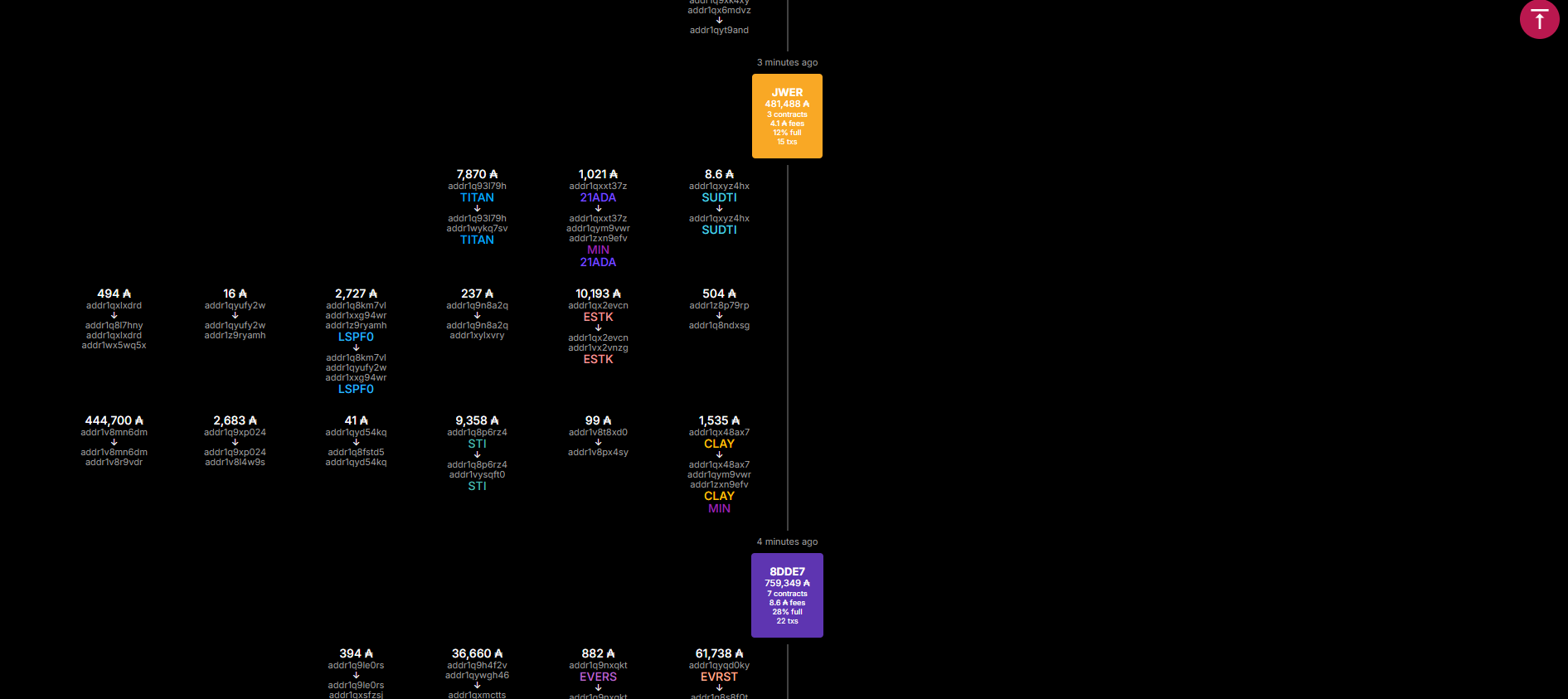
- Visualization for live on-chain transactions and mints: pool.pm
- Ecosystem projects overview: cardanocube.com
- Wallets: Nami – Similar to MetaMask. Eternl – Essentially a full dApp with many features (I highly recommend it).
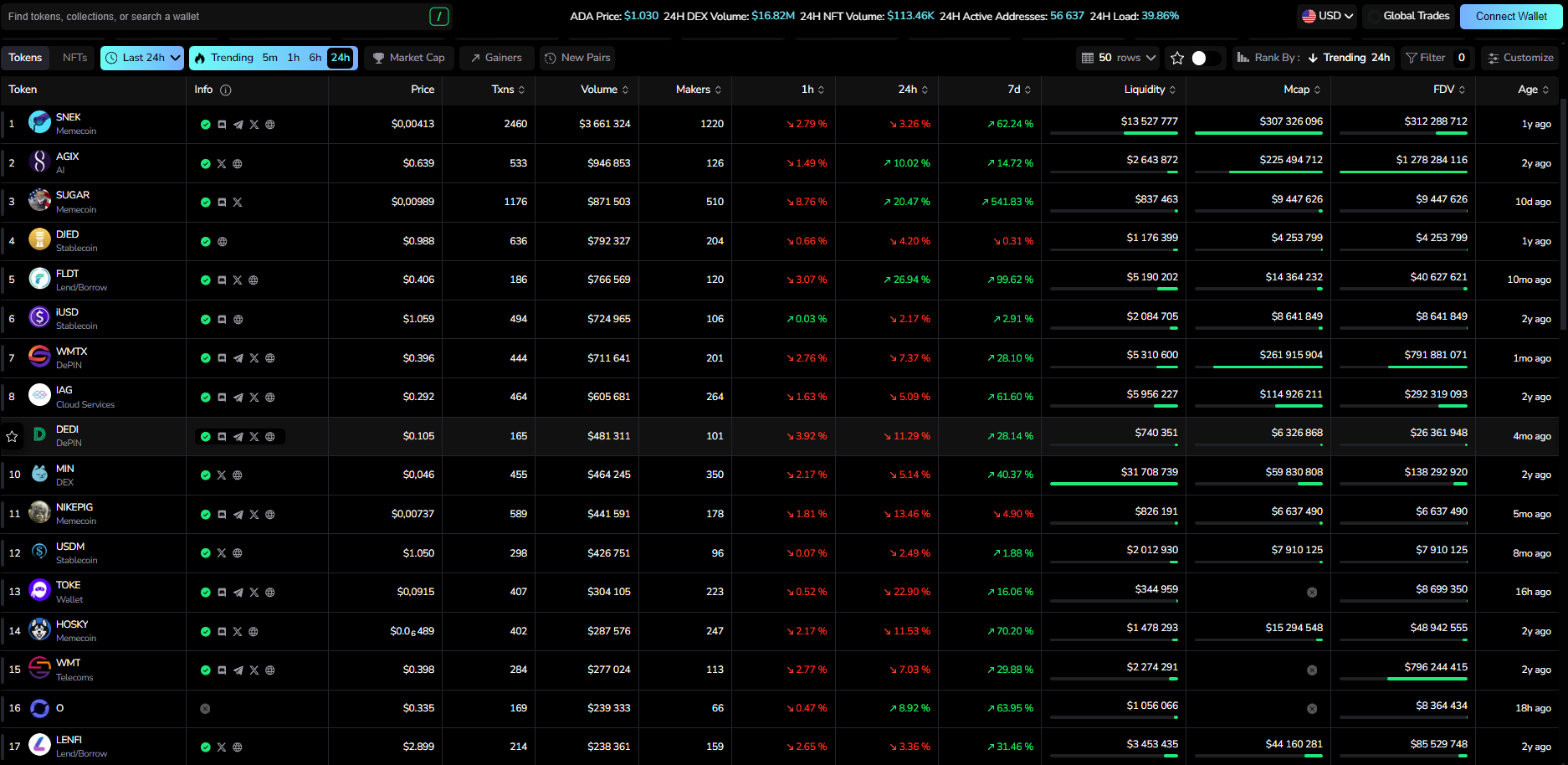
- Dex Screener for Cardano: TapTools
- NFT Marketplace (literally the only one): jpg.store
Key Tokens by Category:
- Memes: $SNEK: The chain's memecoin with its own launchpad (Cardano's version of Pum.fun) – snek.fun
- Stablecoins: $iUSD, $DJED, $USDM (no USDT or USDC available).
- Lending/Borrowing protocols: Liqwid ($LQ), Lenfi ($LENFI).
- AI: $AGIX.
- DePIN (Decentralized Physical Infrastructure): $WMT (one of the ecosystem's most important OG projects), $NTX, $IAG.
- DEXs & their Tokens: DexHunter ($HUNT): The largest DEX aggregator for swaps – app.dexhunter.io.Minswap ($MIN), SundaeSwap ($SUNDAE), VyFinance ($VYFI).
- Gaming: Cornucopias ($COPI).
Notable NFTs:
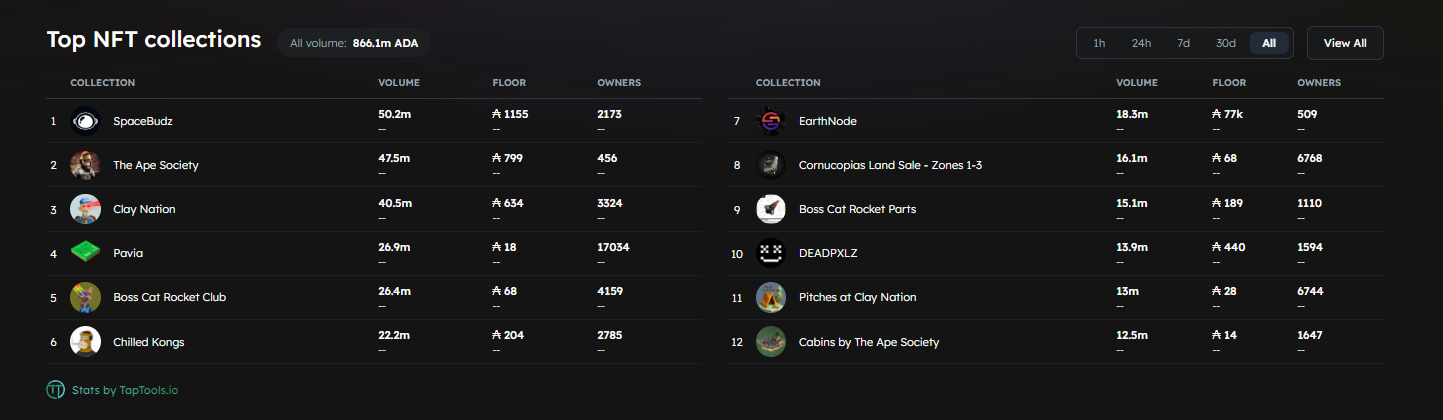
- SpaceBudz, Clay Nation, Snekkies, Tappy by TapTools.
- In Cardano's early days, it was practically a dedicated NFT chain, but the bear market wiped out most of them. Aside from the top OG NFTs, it's no longer worth investing in these. (However, the OGs have held their value quite reliably.)
Other Important Projects:
- ADA Handle (handle.me): The largest Cardano name service. Mint it once—no annual renewal needed.
- Indigo Protocol ($INDY): Focused on synthetics, issuer of $iUSD and $iBTC.
With these projects, you should have a solid starting point. The limited number of tokens and dApps makes it hard to get lost or make big mistakes. If the Cardano ecosystem pumps, most of these tokens tend to follow suit.