

In recent years, blockchain technology has shifted from being a niche interest to a driving force behind innovations in finance, technology, and the arts. As one of the leaders in this industry, Ethereum offers users a gateway into decentralized applications, digital currencies, and limitless potential. But before diving deeper into Ethereum, it's important to understand the foundation it’s built on: blockchain.
Blockchains: The Foundation of Decentralization
At its core, blockchain is a decentralized ledger — a digital record that is maintained across multiple computers, known as nodes, simultaneously. Each transaction or action taken within a blockchain is grouped into a "block" and added to the chain of prior blocks. This process creates a transparent, immutable record that can’t be altered after transactions performed onchain have been finalized.
What makes blockchains unique is their decentralized nature (or let me say component). Instead of relying on a single entity, such as a bank or government, to verify financial transactions and control data, blockchains distribute that power across many participants. This is what is known as decentralization. It enhances security, ensures transparency, and removes the need for intermediaries, which can be slow, expensive, or prone to censorship.
While Bitcoin paved the way as the first blockchain by introducing the concept of decentralized digital currency, Ethereum took this technology a step further. It wasn’t just about currency anymore—Ethereum made it possible to build entire applications and systems on top of the blockchain.
What is Ethereum?
Ethereum is often compared to Bitcoin, but it goes beyond simply being a digital currency (because you have probably only heard of how rapidly Bitcoin goes up and down in value and maybe that was what got you to this article). Think of Ethereum as a global, decentralized computer that allows developers to build and run applications without needing a centralized server. These applications, known as decentralized applications (dApps), can serve any purpose: from finance (DeFi) and gaming to social media and art. Ethereum enables these applications through its smart contracts that automate agreements between parties without needing a third-party intermediary.
At its simplest, Ethereum can be understood as a platform that allows anyone to use blockchain technology for more than just sending value. With Ethereum, people can create tokens, vote on governance proposals, invest in digital art, and even earn yield (think of this as interest) on their crypto holdings—all without needing permission from a central authority.
Over the years, Ethereum has grown into an ecosystem that hosts thousands of dApps, millions of users, and billions of dollars in transactions. Yet, as the network's popularity surged, it began to face scalability issues—hence the rise of Layer 2 solutions.
Layer 2: Scaling Ethereum for the Future
As Ethereum gained traction, the number of transactions and users began to overwhelm the network, resulting in high gas fees and slow transaction times. To solve these challenges, Layer 2 (L2) solutions were developed. L2s essentially take the heavy lifting off the Ethereum main chain by processing transactions on a separate layer and then settling the final results on Ethereum’s mainnet. This process allows for faster transactions, lower fees, and a better overall experience.
Two of the most popular L2 solutions today are Arbitrum and Optimism. These platforms are part of a growing family of rollups, a type of L2 that bundles transactions and sends them to Ethereum for final verification. By doing so, they help Ethereum scale while maintaining its core security and decentralization principles.
Using Arbitrum and Optimism: My Personal Experience
As someone who has been actively using Ethereum for years - 2021 to be precise, so it is not that long 😀, I’ve witnessed the transition from expensive, slow transactions (during the peak of the last bull market), to the smooth experience provided by Arbitrum and Optimism. I have found both platforms to be efficient, especially when exploring decentralized finance (DeFi) and NFT marketplaces. Transactions that would’ve cost a fortune on the Ethereum mainnet can now be done for a fraction of the price, and they’re much faster too.
On Arbitrum, I’ve enjoyed exploring various DeFi protocols like Uniswap and Pike Finance without constantly worrying about exorbitant gas fees. Optimism, on the other hand, has been my go-to because of dApps like Odos and 1Inch for many activities. I will explain how some of these applications work in the next section.
It’s great to see these Layer 2 platforms helping Ethereum scale, making the blockchain accessible to a much wider audience.
Exploring the Ether as a Potential Trader
Ethereum also opens the door for those interested in trading, whether it's tokens or NFTs. You may be familiar with the stock exchange and maybe even own some stocks currently. Ethereum gives you the ability to trade tokens easily without the hindrances that come with the highly regulated stock market. Some of these regulations hedge out most of the world from free participation in these markets. With Ethereum, we now have standard Decentralized exchanges (DEXs) like Uniswap, SushiSwap, and Balancer that have changed the way people trade assets.
One major application you need is a wallet. This is a non-custodial wallet with keys that you control. Select Rabby Wallet for the purpose of this article. Download the extension and follow the steps it brings carefully. Please ensure that you save your seed phrases locally in a place where you alone can access them. Anyone with your seed phrase can unlock all the digital assets you own in the wallet.
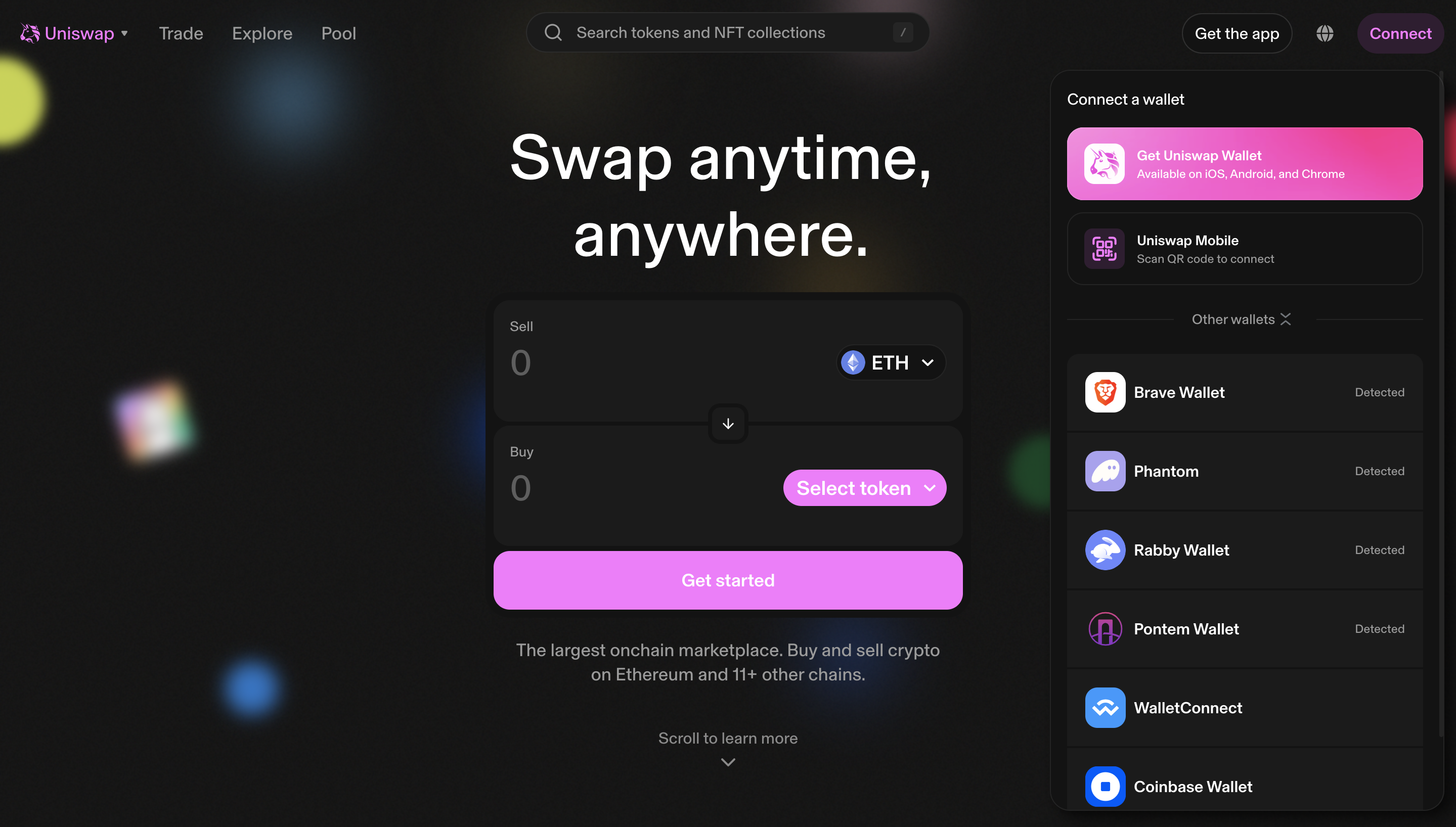
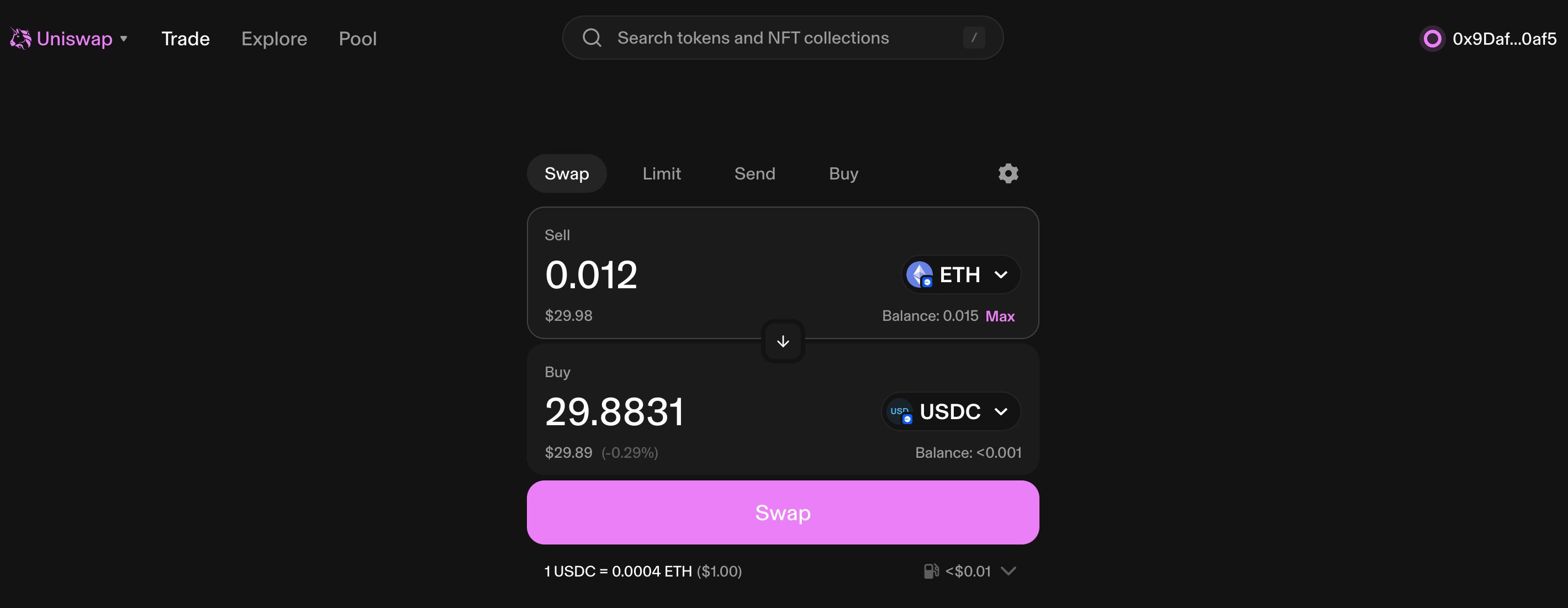
These applications allow you to trade directly from your wallet without relying on centralized exchanges that require personal information or charge high fees. As someone with a growing interest in trading, the learning curve can be steep, but many individuals in the ecosystem provide plenty of resources to help you along the way. Please note that all these are non-financial advice as I am just writing about the possibilities in the Ethereum network.
In addition to tokens, the rise of NFTs has created a vibrant new market for collectors and traders alike. Entire platforms exist now where users can buy, sell, and trade NFTs, just as they would traditional assets. There are other more complicated aspects of decentralized finance on the Ethereum network such as lending services but I won't be going into this as I'm trying to keep the article easy for beginners.
Whether you're flipping NFTs for a profit or holding onto unique digital pieces, Ethereum’s ecosystem has the most opportunities for traders when compared with blockchains.
But Ethereum is more than just a financial system. It’s also changing digital creativity and commerce, especially in the world of art.
Exploring the Ether as a Digital Art Creator and Collector
For digital artists, Ethereum opens a door to a world of possibilities through Non-Fungible Tokens, commonly called NFTs. NFTs are unique digital assets that represent ownership of art, music, videos, or even tweets. With platforms like Blur, OpenSea, and Foundation, artists can mint their creations as NFTs, allowing them to be traded, collected, and even programmed with royalties.
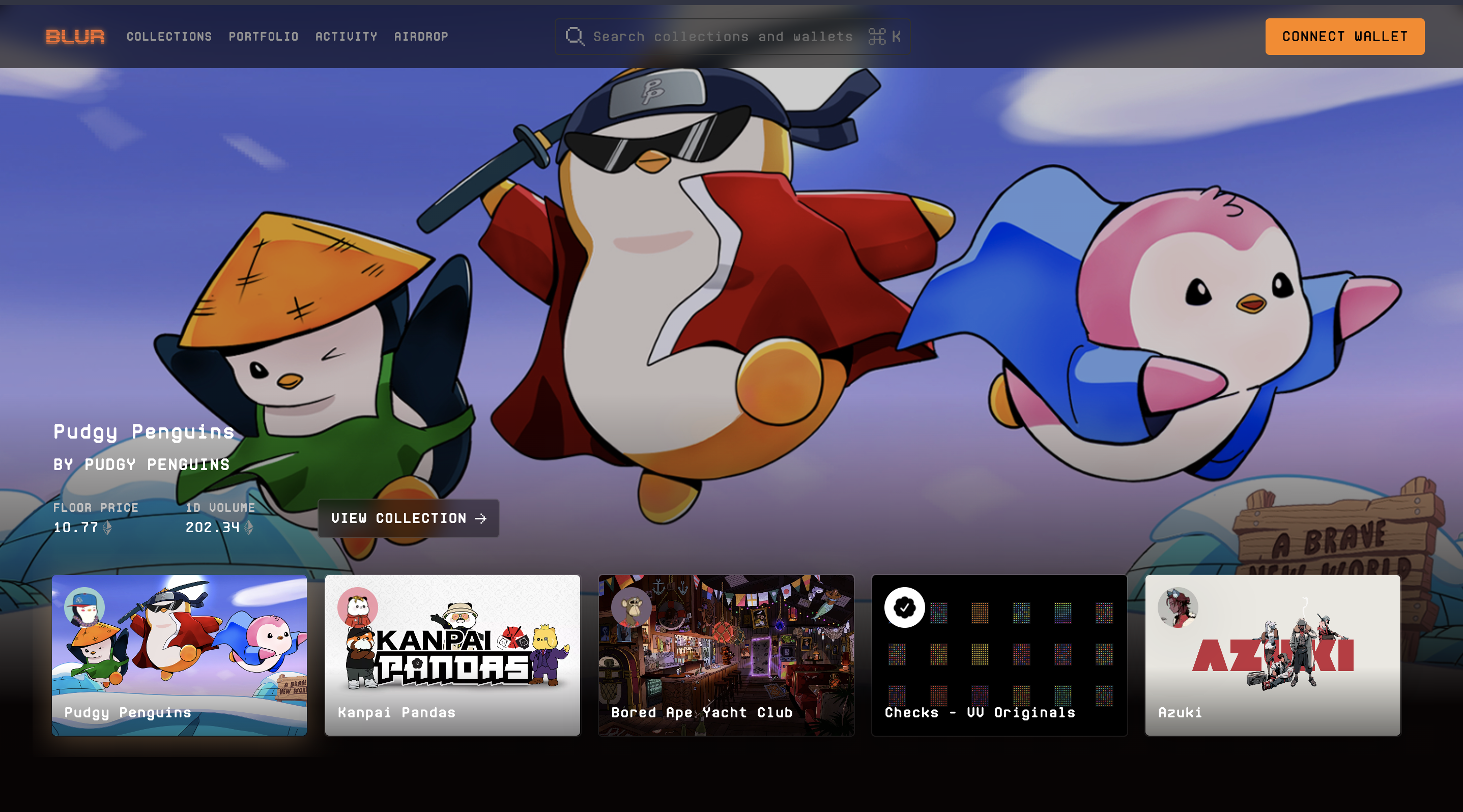
Just as having a wallet is necessary to trade tokens on the Ethereum network, you need to get an Ethereum wallet funded with some ETH (based on the L2 of your choice like Arbitrum or Optimism) and you can buy a random NFT that is worthless or that costs about $2 to learn how it works. After purchasing one, you can see the NFT in your wallet.
Thanks to its decentralized nature, artists creating their artworks don’t need to rely on galleries or third-party agents to sell their work. They have direct access to their audience, no matter where in the world they are. Additionally, smart contracts allow artists to program automatic royalties, meaning they can continue to benefit from secondary sales of their artwork — something that isn’t possible in traditional art markets.
Final Thoughts: The Ether Awaits
Whether you're a digital artist, a trader, or just curious about what this new technology can offer, exploring the Ethereum ecosystem is an adventure like no other. With innovations like Layer 2 solutions, decentralized applications, and NFTs, Ethereum continues to lead the way in creating a decentralized, borderless future. And the best part? We're still at the beginning of this journey—there’s so much more to discover.