01
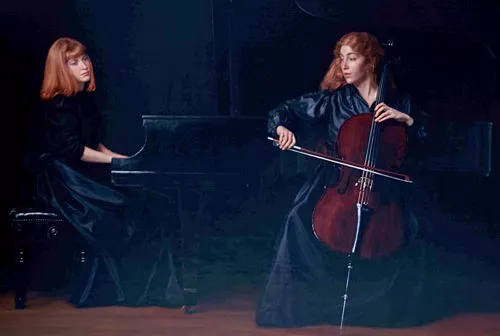
Chen Yifei's "Duet"
Chen Yifei's "Duet"
Made in 1988
Transaction price: RMB 45920000
"Duet" is the largest portrait of Chen Yifei (238 cm x 162 cm) in music theme, and it is a sisters with another 1986 work "Quartet".
Chen Yifei used his unique technique to contrast the dynamics and expressions of the two musicians playing against a dark background, creating a balance between stillness and movement, complementing each other. The profound and romantic beauty of classical music permeated through it.
The concept of the work is grand and elegant, with soft yet precise brushstrokes, almost reaching a perfect state, captivating viewers.
02
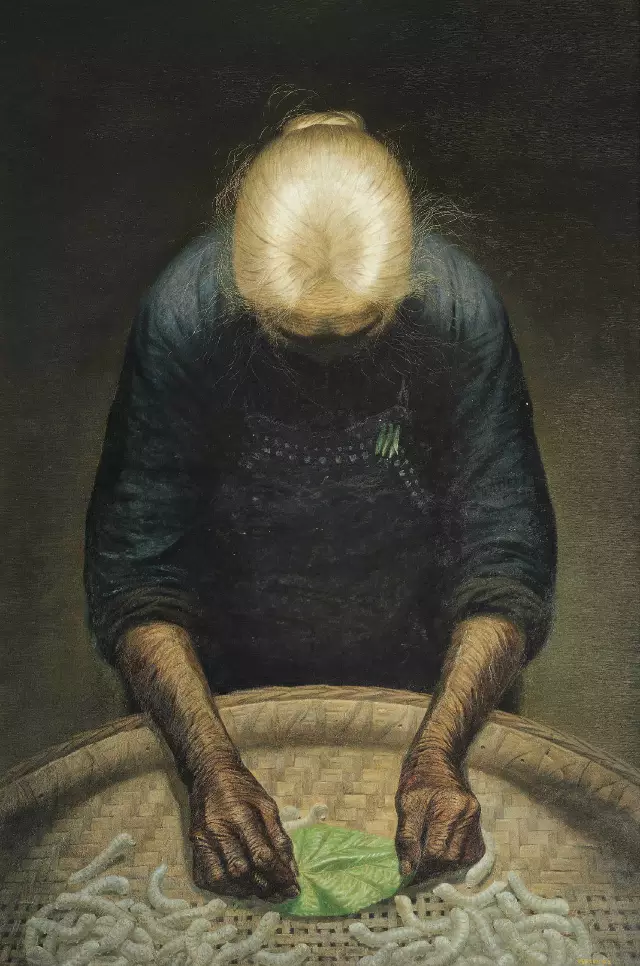
Luo Zhongli's "Spring Silkworm", also known as "Mother"
Luo Zhongli's "Spring Silkworm" (also known as "Mother")
Created in 1983
Transaction price: RMB 43700000
In the early 1980s, "Spring Silkworm" was exhibited in the United States. After the completion of the creation of "Spring Silkworm", it also received attention from the art community.
In the early 1980s, "Spring Silkworm" participated in an exhibition organized by the Chinese Artists Association to the United States, but this work never returned from the United States. "I don't even know where this piece went, it should have been collected by an American collector," Luo Zhongli recalled.
In 1985, artist Jiang Tiefeng collected "Spring Silkworms". According to information provided by Christie's in Hong Kong, in 1985, Chinese American artist Jiang Tiefeng collected this artwork from the Fincher Gallery in Minnesota, USA. Prior to this, this artwork had been collected by a private American collector.
In the late 1980s, Luo Zhongli replicated "Spring Silkworm". "In the years following that exhibition, the artwork 'Spring Silkworm' remained missing, and the school asked me to replicate two more." Luo Zhongli told reporters that one of the two replicated works was collected by the famous Taiwanese collector Lin Mingzhe, while the other was in my own hands. ".
03
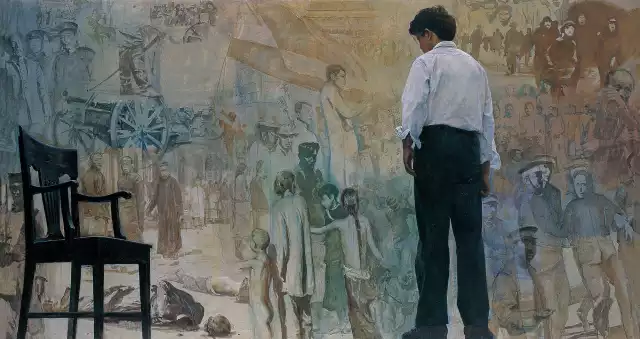
Chen Yifei's "Pacing"
Chen Yifei's "Pacing"
Made in 1979
Transaction price: RMB 40432000
In 1979, Chen Yifei created the oil painting "Pacing". The theme of this oil painting is to reflect on modern Chinese history, express democracy and humanistic ideas.
Chen Yifei faced the scene himself, as if a real image composed of rolls of film extended and displayed outside him. The Art News magazine in the United States praised this oil painting by Chen Yifei as "sharp and charred, realistic and profound in artistic conception, imposing and professional.".
This oil painting marks the starting point for Chen Yifei's entry into the international art world, and also signifies a profound transformation in his painting style and ideological mindset.
04
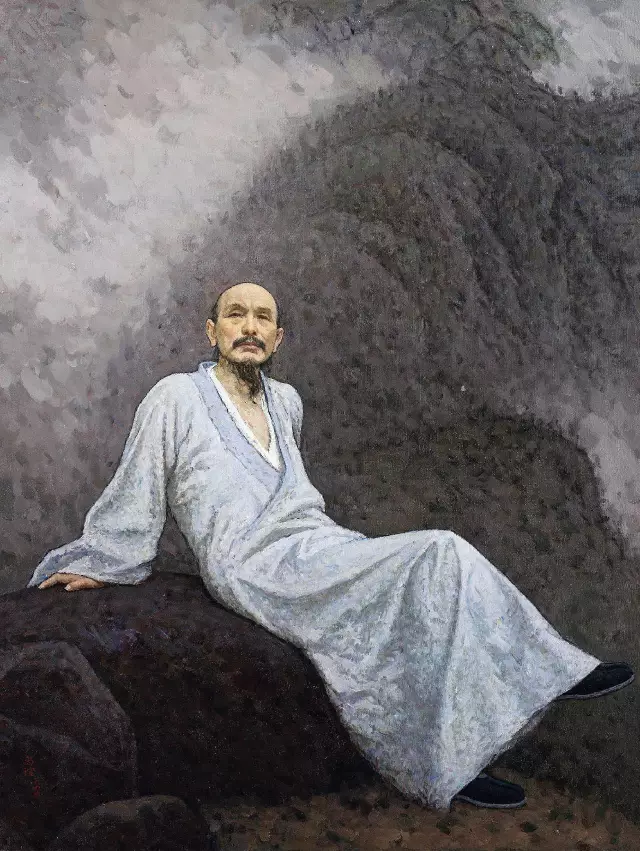
Jin Shangyi's "Kun Can"
Jin Shangyi's "Kun Can"
Made in 1999
Transaction price: RMB 39100000
Kun Can is an important work by Jin Shangyi that attempts to combine ink and oil painting.
The Kun Can painting style, one of the four monks in the late Ming and early Qing dynasties, is characterized by its richness, which perfectly satisfies the ink and wash expression of oil painting. The high difficulty of integrating the full body portrait with the real landscape environment, and the combination of the realistic reproduction of oil painting with the freehand expression of landscape, is the academic difficulty and appreciation focus of this work.
05
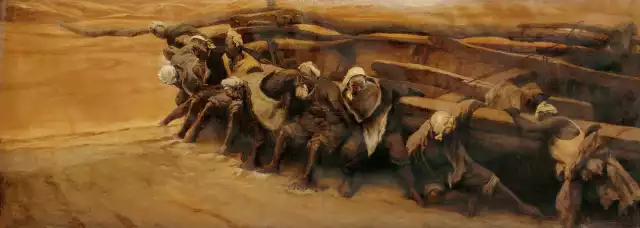
Shang Yang's "Yellow River Boatman"
Shang Yang's "Yellow River Boatman"
Made in 1981
Transaction price: RMB 31625000
In 1981, Shang Yang, who was almost forty years old, embarked on the journey of seeking roots in northern Shaanxi. This is his second trip to the west after more than 20 years, this time to search for the emotions of his youth, using the Loess Plateau as material to complete his graduate creation.
Being loyal to one's inner needs and creating art with one's most moving factors is Shangyang's consistent artistic pursuit. On both sides of the Yellow River, Shang Yang was inspired by the surging waves of the Yellow River and the bravery of boatmen. Based on multiple sketches, he created the famous oil painting "Yellow River Boatmen".
"The Yellow River Boatmen" takes an angle where a ship is about to run aground in strong winds and waves. All the boatmen are not propping their boats on the ship, but fighting against the surging rapids in the mud, desperately pulling the ship towards the shore. There is a strong fighting force in the picture, giving people an extremely stunning visual effect.
Although there have been works depicting similar themes in the past, such as Russian painter Robin's "The Volga River Tracker", Shang Yang still demonstrated his unique style in "The Yellow River Boatman" with his profound emotions and simple language. It is precisely with this style that Shang Yang is connected to the enduring consciousness of life on the Loess Plateau, which has also given his art tremendous energy for continuous innovation.
06
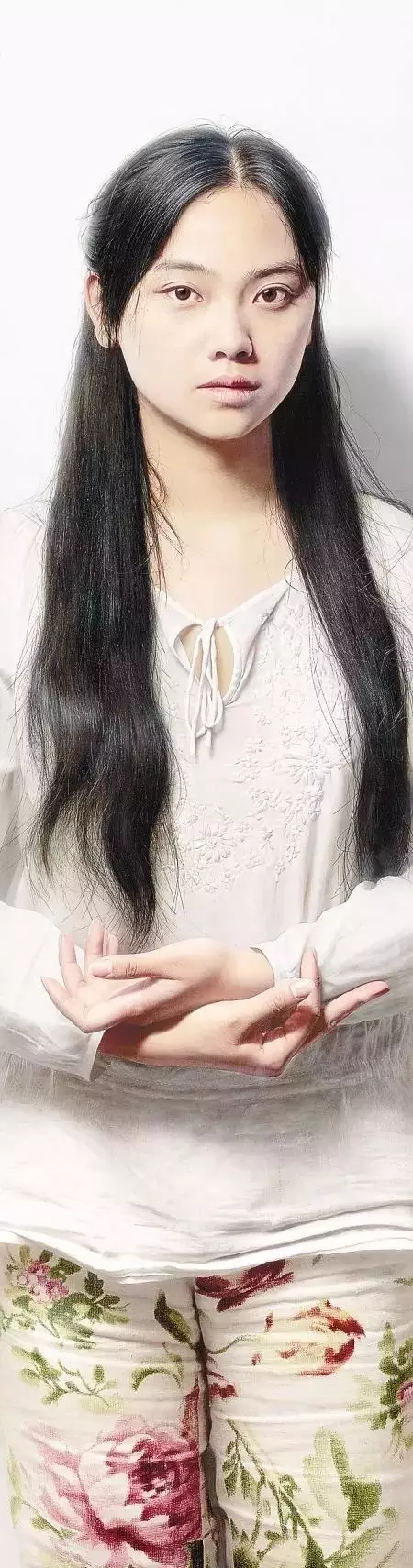
Leng Jun's Portrait of Xiao Luo
Leng Jun's Portrait of Xiao Luo
Made in 2005
Transaction price: RMB 31360000
This work is "delicate yet not greasy, realistic and natural", and the author's painting creation took about 5 months. Close up sketching, meticulously depicting every detail, highlighting texture, and finally using unique techniques to completely eliminate brushstrokes, making the picture smooth and bright.
Standing in front of Leng Jun's works, even if you don't understand oil painting, you can feel a heart wrenching power.
Leng Jun is one of the founders of Chinese super realistic painting. Starting from the early 1990s, he stood out in the oil painting industry with his unique ideas and extraordinary skills.
07
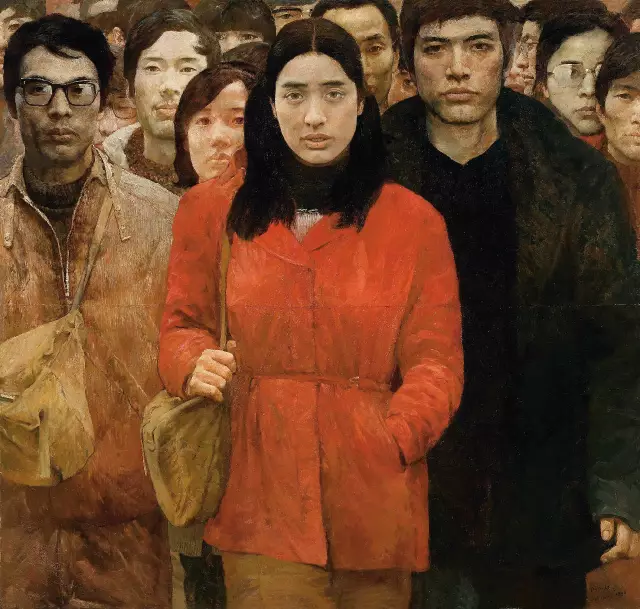
"The Third Generation" by He Duoling and Ai Xuan
"The Third Generation" by He Duoling and Ai Xuan
Made in 1984
Transaction price: RMB 28750000
"The Third Generation" is a masterpiece created by the collaboration of two powerful painters, He Duoling and Ai Xuan, which was rare at that time or now. The subject objects depicted in the painting are all their friends or classmates around them, including well-known painters Zhang Xiaogang, Zhou Chunya, female poet Zhai Yongming, and famous architect Liu Jiakun.
In the early 1980s, my family was still at Sichuan University. When I went to work in the morning, I encountered a crowd of college students attending classes. In front of the teaching building, there was a towering statue of Chairman Mao with his fingers pointing eastward. The crowd under my feet was moving in waves, moving in all directions. Every day, I saw such scenes, which felt like a painting.
At that time, it was the beginning of the reform and opening up, with a mix of old and new. It was like a garden that had been abandoned for many years suddenly encountering spring news, with a hundred flowers ready to bloom, and foreign species also eager to move. No one knew what the future would be like. I have just graduated, and I still vividly remember the fresh and sensitive atmosphere on campus.
At that time, Chinese intellectuals - if I were also an intellectual - could be roughly divided into three generations: the generation who went to school in the 1950s and 1960s; The generation of the Cultural Revolution; The college students after the Cultural Revolution are us. As the initiator of the third generation, I always believe that we are lucky. The experience pattern of the first generation (using my parents as an example) can be summarized as war+political movement; The second generation is an endless political movement. At the right time of life, we both witness change and can stand out, become survivors and bystanders, and enjoy the consequences of change. Starting from us, people can go their separate ways under the feet of the great helmsman, and there will be a lot of noise.
The above is the origin of the third generation. At that time, I found a classmate who I thought could represent the external and spiritual style of this generation as a model. My later development proved that I have a vision. Nowadays, they have all become influential figures among their contemporaries, such as Liu Jiakun, Zhai Yongming, Zhang Xiaogang, Zhou Chunya, and so on.
I am fortunate to collaborate with Ai Xuan on this painting. Among the front row characters, Liu Jiakun and Zhai Yongming were painted by me. Zhang Xiaogang was painted by Ai Xuan
——He Duoling
08
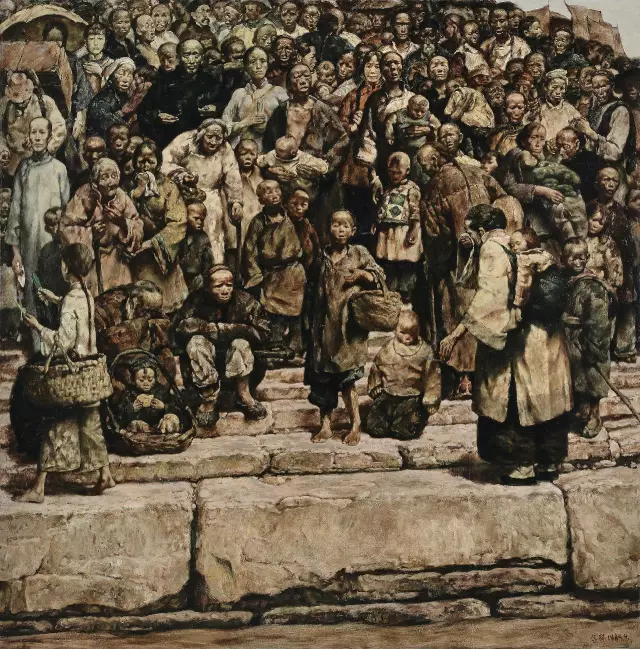
Cheng Conglin's "The Steps of the Dock"
Cheng Conglin's "The Steps of the Dock"
Made in 1984
Transaction price: RMB 28750000
This work continues Cheng Conglin's historical sense of crisis since the late 1970s.
The Steps of the Wharf showcases the historical landscape of Chongqing Wharf in the late Qing Dynasty. The crowded crowd, tattered clothes, and numb eyes all presented the sense of suffering of the people of that era.
In sync with local realism, Cheng Conglin also created a series of Yi ethnic style works in the early 1980s. However, this work clearly reflects the social responsibility and historical consciousness of artists in specific historical periods, reflecting the cultural tradition of Chinese literati who have been worried about the world for thousands of years.
People often say that the meaning of words is determined by the context. In the historical context of that time, Cheng Conglin's work was not just a simple style painting. In the era that had just ended in a specific historical period, it clearly had a reflective perspective and a sense of social criticism.
——Yin Dan (Art Critic)
09
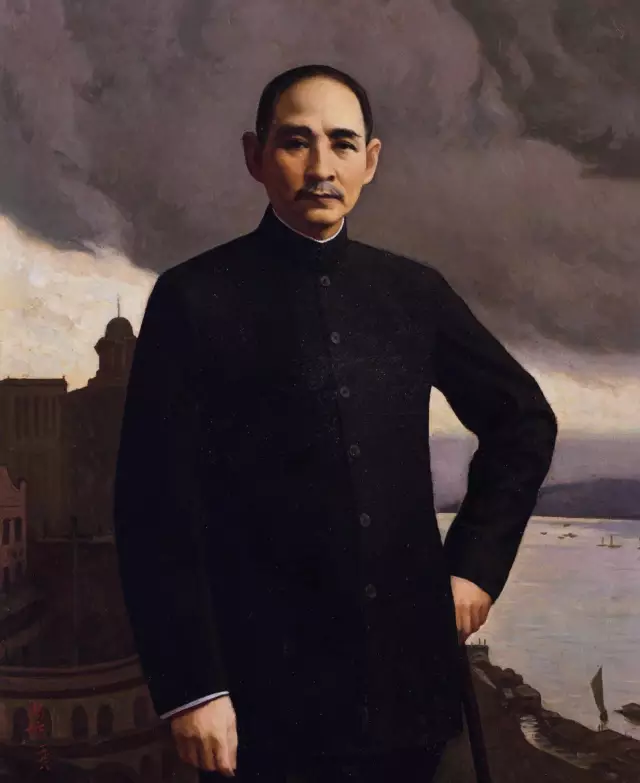
Jin Shangyi's "Sun Yat sen"
Jin Shangyi's "Sun Yat sen"
Made in 1996
Transaction price: RMB 23000000
In the field of Chinese portrait painting, Jin Shangyi's portrait works hold a pivotal position and have the most profound influence. He is an artist who provides a unique answer to the theme of "human beings" in this era.
The "Sun Yat sen" released by Chunpai Huachen reproduces the highest level of Jin Shangyi's creative peak from the 1980s to the 1990s. Jin Shangyi is good at injecting the characteristics of the times into his artistic image. This work can be said to be a tribute to heroes by famous artists, and the strokes vividly express Jin Shangyi's respect for Sun Yat sen, a great figure of the times.
It is worth mentioning that in his work, Jin Shangyi carefully designed Guangzhou, the revolutionary birthplace that was in a state of change at that time. The scene is solemn and solemn, giving people a sense of historical significance, reproducing the arduous years of Mr. Sun Yat sen's dedication and unremitting struggle for the country in Guangzhou.
ten
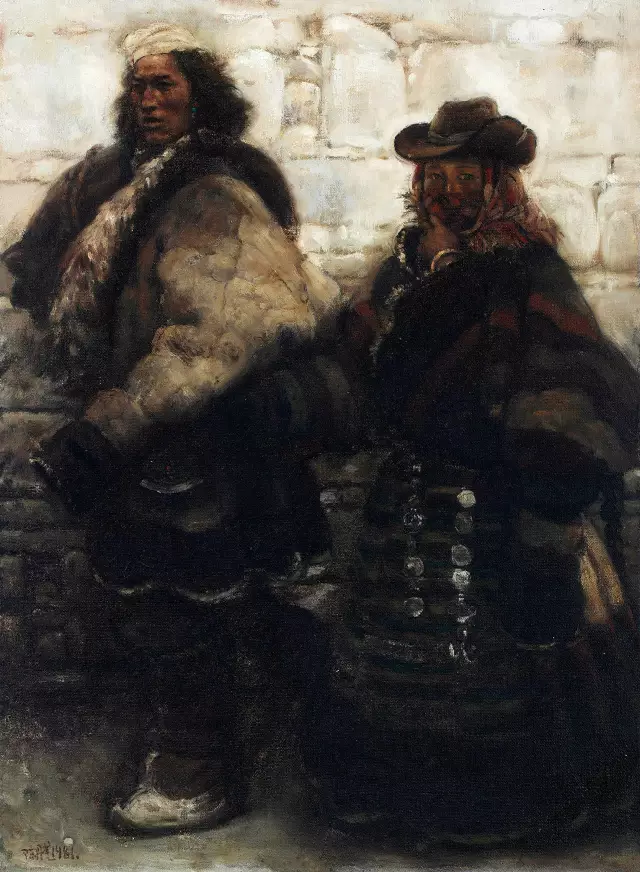
Chen Danqing's "Entering the City III"
Chen Danqing's "Entering the City III"
Made in 1981
Transaction price: RMB 23000000
Chen Danqing, the second of Xizang group paintings entering the city, talked about the three unpublished Xizang group paintings.
In 1980, I graduated and stayed on campus. The following year, I took out some of the sketches I had already drawn during my time in Lhasa and continued to create. The most infatuated impression I had at that time was the simple scene of Tibetans pulling their sleeves to prevent getting lost when they went to the city: "One of the Towns", depicting three girls walking in each other's clothes.
The painting "Entering the City II" depicts a wife holding a baby while pulling her husband's long sleeve, which later became the most published one. This painting "Entering the City III" was created as an oil painting based on one of the different variations of couples entering the city in many sketches. The walking direction and attire of the couple in the picture are different from the previous one.