One of the things that strikes me most in “Fooled by randomness” by Nassim Taleb is that:
It’s actually not natural for us human beings to learn from history.
As a trader himself, the author’s main argument is that if we could learn anything from history, why so many investors/traders still lose a lot of money betting/speculating in the market, knowing all too well that the majority of people who had done it in the past failed?
Probably, part of the reason for this issue can be found in a very thought-provoking quote from Sydney J. Harris:
“History repeats itself, but in such cunning disguise that we never detect the resemblance until the damage is done”
And because we human beings seem to lose our ability to stop and think in this fast-paced ever-changing world, even the slightest difference in the new situation can disguise us, can catch us off guard, and we will happily optimistically join in the trend as if there is nothing to worry about.
To make the issue worse, it seems we do not even know how to learn from our own history. Have you ever known someone who keeps loving the wrong persons, again and again, with the same motif that sometimes it’s so striking to listen to? Or, another example, can you see how many people are still trying to keep up with the Joneses, never able to accept the fact that a bigger house/a luxury car/or any other fancy new stuff will not solve the problems inside themselves?
***
That’s why I think reflection, and the ability to separate ourselves from our acts, in order to think independently and observe things objectively, are truly important nowadays.
Because without them, we might have to learn the same lessons again and again, paying not only once, but several times for each by our own mistakes.
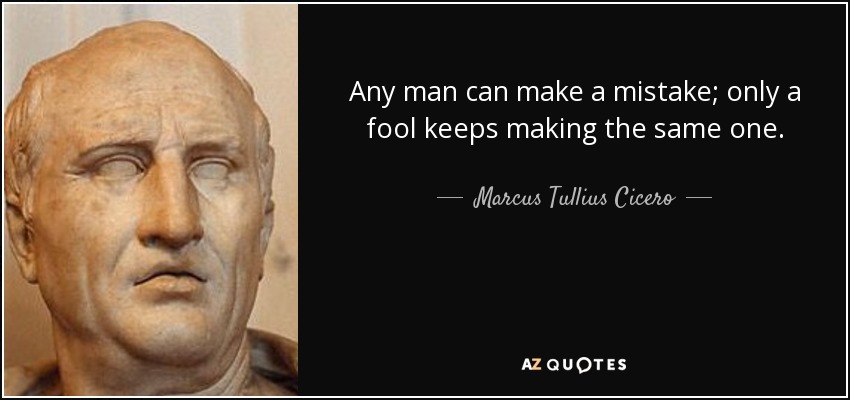
Which, I guess, is exactly the definition of a fool.