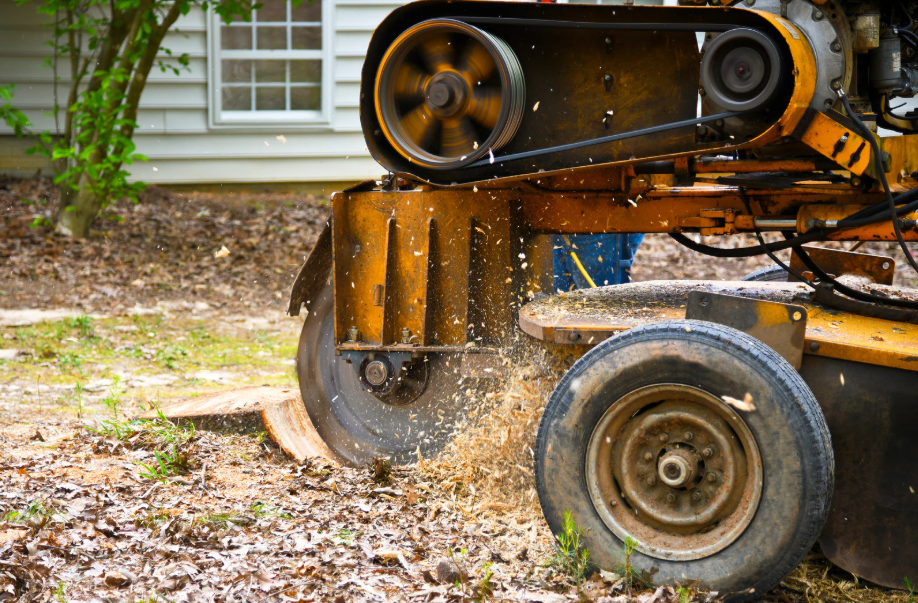
A leftover stump can be more than just an eyesore. It gets in the way of mowing, makes garden beds awkward to design, and, if left alone, often sprouts shoots that need cutting back again and again. That’s why most people look to tree stump grinding as the practical way to finish the job once a tree has been removed. The method targets the base and larger roots without ripping up half the yard, leaving the ground ready for turf, paving or a fresh planting bed. I’ve seen backyards transform almost overnight once a stump was gone — paths ran straighter, lawns felt safer underfoot, and suddenly the whole space opened up for use again. It’s a small detail that changes how the whole garden works.
Why remove a stump after tree work
A stump doesn’t just sit there; it behaves. It regrows, it rots, it moves the ground around it. That’s why homeowners and facility managers don’t wait long to address it after the tree is removed.
- Trip hazards disappear, making footpaths, play areas and tight side access safer for everyday use.
- Pests and fungal activity have fewer places to establish. That matters near decks, sheds and timber sleepers.
- Mowing and edging become simpler, with fewer snags and gouges in the turf.
- Future planting and landscape works are easier because you’re not designing around a permanent lump.
When I first started coordinating yard clean-ups for older properties, the pattern was obvious: the blocks that kept their stumps tended to let other jobs slide too. The sites that ground stumps early regained momentum—less mess, fewer delays, faster upgrades. It’s a small decision that unblocks a lot of downstream work.
How stump grinding works (and what to expect)
Stump grinding is targeted removal using a spinning cutter wheel that shaves timber into chips. Operators set the depth based on what’s planned next—turf, paving, a low garden bed—and work in passes until the stump crown and key roots are reduced.
- Site protection comes first: matting over pavers, shields for nearby glazing, and a tidy hose-down at the end.
- Underground checks matter. Locates for services help avoid surprises; surface markers guide the cut path.
- Depth is planned, not guessed. Turf wants one result, a slab sub-base wants another.
- Cleanup is part of the job. Chips can be left to settle as mulch or removed for a flatter finish.
On steep blocks I’ve managed, the “feel” of the grinder counts. I’ll nudge the wheel across the grain, pause when I hear a change in tone (often a root flare or old stake), then ease back in so the cutter meets timber—not rubble. That rhythm preserves sharpness, keeps the cut consistent and avoids unnecessary ground disturbance.
Regulations, neighbours and site safety
Before anyone touches a stump, it’s smart to consider access, nearby structures and local rules. Even when no permit is needed for the stump itself, the same good-practice framework that applies to tree work still applies at ground level—clear zones, PPE, stable footing, dust and noise controls, and attention to underground assets.
When people talk about stump grinding cost, they’re often thinking about more than just the work itself. Local rules, permit requirements and safe work standards all shape what the process involves. Guidance from Safe Work Australia highlights that stump grinding sits within broader tree work risks, so protective measures and site planning should always come first. That perspective keeps conversations with neighbours and contractors on the same page, and helps avoid surprises when the work begins.
- Create predictable access: move vehicles, pets and bins to give a clear, direct path for the machine.
- Think about boundaries: screens protect fencing and windows; simple signage keeps delivery drivers out of the work zone.
- Manage soil and chips: stockpile away from drains and garden edges so nothing migrates after rain.
- Reset the surface: a rake and quick compaction give you a usable patch straight away, not a lumpy mound that lingers.
DIY or professional: choosing what fits your block
Some stumps are friendly: open access, sandy loam, plenty of clearance. Others are knotted under pavers, hard up against brickwork, with shallow services crossing diagonally—less friendly. Deciding whether to bring in a crew or handle parts of it yourself comes down to site constraints and what finish you’re after.
- Open lawn, no obstacles: DIY prep (clearing, marking irrigation) can make sense, with a specialist handling the grind.
- Near structures or services: a professional operator’s touch reduces the chance of scuffing brickwork or nicking lines.
- Multiple stumps, mixed sizes: a crew can stage the sequence efficiently, removing chips as they go.
- Planting straight away: ask for a deeper grind and a level backfill so you’re not reworking the area later.
When I’ve coordinated mixed sites—one big stump under a clothesline, three smalls across a back lawn—the smoothest approach was splitting roles: homeowners cleared access and flagged sprinkler runs; a pro operator handled the cuts and depth settings; I closed out with a compacted top-off so the new turf sat flush. If you’re leaning toward a homeowner-friendly explainer on selecting a local stump grinding service, focus on access notes, finish expectations and aftercare rather than machines and specs. That’s the clarity most people need on the day.
Aftercare and site restoration
Once the stump is ground, you’re left with a shallow bowl of chips and loosened soil. What you do next determines how tidy the area feels a week later.
- For turf: remove a portion of the chips, add screened soil, level, then water in to settle before laying grass.
- For paving: aim for a firmer base; compact layers so the slab or pavers won’t slump over time.
- For planting: deeper grinding gives root room; mixing in fresh soil reduces chip-related nitrogen drawdown.
- For edges and beds: use a straightedge to check transitions so mower wheels and wheelbarrows roll smoothly.
I like to revisit after initial settlement—just a quick pass with a rake and tamper—so the surface stays true. It’s a small habit that avoids the wavy patch you sometimes see when chips compress unevenly.
Final thoughts
Good stump work is mostly planning and care: set expectations, protect surfaces, control the cut, and reset the ground so the space is genuinely usable. If you’re mapping out a weekend project and comparing machine hire with bringing in a crew, a practical overview that touches on site access, cutting depth and cleanup will help you land on a sensible next step. Many homeowners also look at what a tree stump grinding service can offer compared with handling the job themselves, since it’s often the balance between safety, access, and finish that decides the outcome. In the end, the goal is simple: the stump disappears, the garden plan stays on track, and the space starts pulling its weight again.