

A pergola is more than just a frame in the garden — it’s the anchor that defines how you use your outdoor space. The right structure can soften harsh sun, invite breezes, and give you a sheltered corner that works in every season. Around the country, homeowners are mixing timber, steel, and aluminium in ways that reflect both climate and taste. From coastal decks that need to resist salt spray to suburban courtyards where privacy matters most, the choices are wide open. Looking at pergola designs Australia offers a window into how style and practicality meet in real backyards. It’s not about trends so much as finding shapes, roof angles, and finishes that respond to the way you live outside. Done well, the result is a space that feels calm, connected, and ready for both weekday dinners and weekend gatherings.
What makes a pergola work in Australia
Sun angles, coastal air, and sudden southerlies shape how a pergola behaves across the year. Orientation and roof style do heavy lifting, but so do height, spacing, and the way you connect it to the house. A quick hypothetical I like to use when advising: a courtyard in Fremantle with hot afternoon sun calls for a higher roof with tighter slat spacing on the west, while a leafy Bendigo deck benefits from wider spacing and a lower beam to hold winter warmth. Different needs, same principle — respond to the micro-climate.
- Position posts and rafters to cast shade where you actually sit at midday, not where it looks symmetrical on paper.
- If the breeze arrives from a predictable direction, leave the downwind side a little more open so air can carry heat away.
- Choose a roof profile (flat, skillion, or curved) that sheds rain fast but doesn’t trap warm air under the canopy.
- Keep the walk-through clear: plan head height and beam placement so movement feels effortless.
Timber brings warmth and takes stain beautifully; aluminium shrugs off salt spray; steel can be slender and strong in high-wind suburbs. Screens are your “fine-tuning” dial — batten gaps, mesh density, and even vine selection change the shade quality without making the structure feel heavy. The goal is a space that welcomes you on a hot Sunday as easily as a cool Thursday evening.
Shade, heat and how your backyard behaves
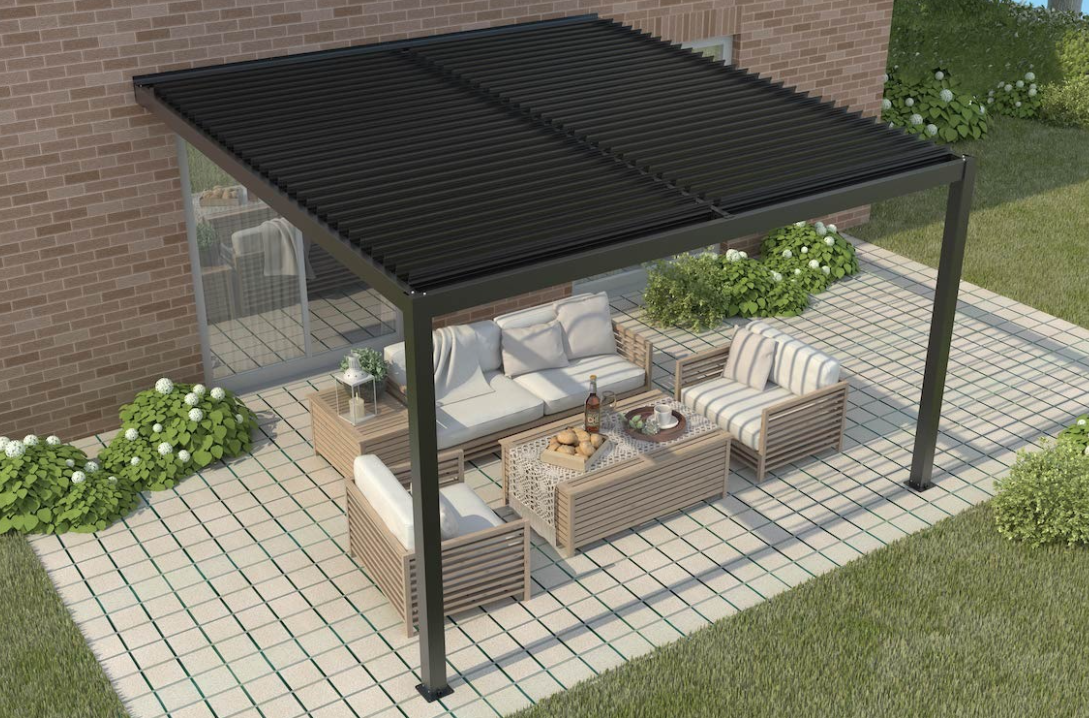
Good shade feels natural — cool, dappled, and bright enough for reading. That balance starts with roof choice and continues with how you place slats or battens. Passive design principles are surprisingly useful here: capture winter sun from the north and temper harsh western glare. Many homeowners now look to sustainable pergola shading solutions as a way to keep outdoor areas comfortable across the seasons without relying on constant adjustments or heavy materials. It’s not about following a fad — it’s about creating shade that works with the climate rather than against it.
A simple rule: shade what’s hot, admit what’s gentle. Adjustable louvres let you pivot for shoulder seasons; fixed battens, angled correctly, can deliver most of the same benefits with less fuss. Vine-covered frames (wisteria, native hardenbergia) give a soft light in summer and bare out in winter to pass warmth. In bushfire-prone areas, materials and plant choices need extra care — think ember resistance and clearances — but you can still create filtered light that doesn’t trap heat.
Choosing materials that handle the elements
Materials decide how your pergola weathers, literally and visually. Softwoods are forgiving to work with; hardwoods offer density and crisp edges; powder-coated aluminium is light, steady, and low-maintenance. In coastal towns from Cottesloe to Cronulla, salt mist is the quiet enemy — it tests coatings and fasteners first. Inland, UV and temperature swings produce finishes in a different way.
- Select fasteners and brackets rated for your exposure, not just the timber species.
- Treat end-grain properly; that tiny detail stops water wicking into the rafters.
- If you’re training climbers, give yourself removable wire sections for pruning access.
- In fire-risk postcodes, check the relevant BAL considerations early so material choices stay compliant.
For many households, there’s also the question of environmental footprint. That’s where considering eco-friendly pergola materials makes sense. These options balance durability with a lighter impact, often reducing the need for heavy upkeep while still achieving a warm, natural look. A hybrid mix — aluminium posts paired with timber rafters, for instance — can offer the best of both worlds in durability and character.
Balancing personality and practicality
Design is the fun bit — profiles, colours, joinery that makes you smile — but it has to serve the way you actually use the space. If your place swings between group lunches and quiet evening reads, flexibility matters more than the perfect “look” from the back fence. Adjustable roofs and modular screens let the same footprint play multiple roles through the week.
- Sketch two arrangements for furniture: a shared table setting and a lounge setup; design the structure to suit both.
- Consider sightlines from inside — a well-placed beam can frame the garden rather than block it.
- Use lighting that complements shade patterns, not fights them (concealed strips along rafters are subtle and useful).
- Keep gutters and downpipes accessible; maintenance you can reach is maintenance you’ll actually do.
For homeowners weighing up kit builds against fully tailored projects, it helps to think about the custom pergola benefits that shape long-term comfort. A tailored design can solve awkward boundaries, maximise tricky sun angles, and even highlight a garden feature you don’t want to lose. Kits remain a quick option, but custom work often makes the pergola feel like it was always meant to be part of the house.
Final thoughts
A pergola succeeds when it filters light, channels breeze, and makes the daily shuffle between kitchen, table, and lawn feel seamless. Start with orientation and roof form, then let materials and screens refine the comfort layer. Test ideas during the hours you’ll use the space most, and give yourself flexibility where your lifestyle actually needs it. Aim for simple, robust detailing and a shape that belongs to your yard, not a catalogue. Do that, and the structure fades to the background — the way good outdoor design always does.