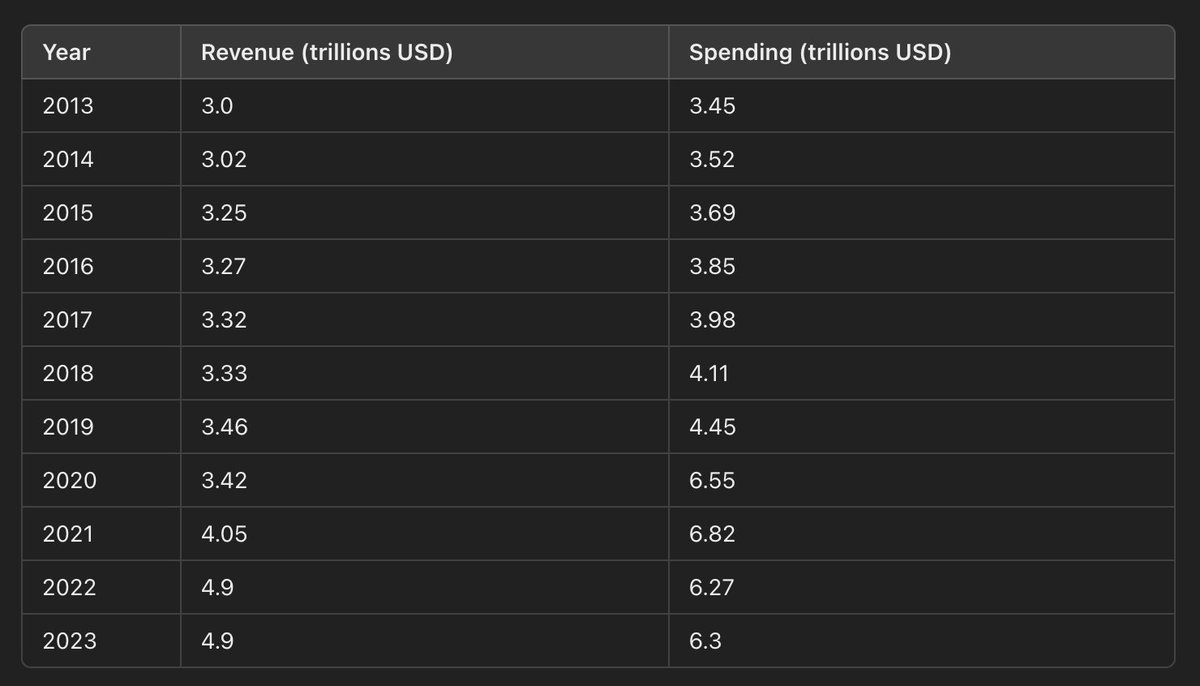
In recent years, the U.S. government has consistently faced annual deficits exceeding $1 trillion. Since 2013, government spending has nearly doubled, while revenue growth has not kept pace, resulting in an ever-growing deficit. Below is an overview of U.S. government revenue, spending, and deficits over the past decade:
Addressing the Deficit
Although there are various methods to address the deficit, the primary approach remains issuing new government bonds. Currently, the U.S. government debt stands at $33 trillion. Many of these bonds were issued in the past at lower interest rates. As interest rates rise, newly issued bonds carry higher interest costs. The longer the interest rate hike cycle lasts, the more the government will have to pay on new debt.
Impact of Interest Rate Cycles
- Interest Rate Hike Cycles: During periods of rising interest rates, investors prefer new bonds with higher yields, potentially leading to liquidity issues for older bonds.
- Interest Rate Cut Cycles: Conversely, during periods of falling interest rates, investors may favor older bonds with higher yields, causing liquidity issues for new bonds.
Future Considerations
The primary goal for the U.S. government is to manage the liquidity of its debt, as the growing scale poses increasing risks. The current interest rate hike cycle provides an opportunity for the government to observe and determine who the main drivers of future U.S. bond purchases will be. It appears that non-dollar stablecoins could become significant players in this market, potentially becoming key partners for the U.S. government.
In summary, the increasing national debt and the implications of interest rate changes highlight the importance of strategic debt management and identifying reliable future investors to maintain economic stability.